Gas & Wood Fireplaces
A Gas Fireplace Smells Strange: What to Notice and When to Stop Using It
A smell around a gas fireplace is a reason to pay attention, not a reason to guess. Learn the difference between an emergency gas odor and a maintenance question.
Start with the safety question
If you smell a strong rotten-egg or sulfur-like gas odor near a fireplace, leave the area immediately with everyone in the building. Once you are somewhere safe, call 911 and your gas utility. Do not try to find the leak, relight the fireplace or operate switches while leaving. The utility's emergency instructions take priority over an ordinary service appointment. A website cannot tell you from a description whether gas is present.
The same goes for a carbon monoxide alarm: get everyone outside and follow the alarm and emergency-service guidance. Carbon monoxide has no smell. You cannot use your nose to decide whether a room is safe. Fuel-burning appliances, including fireplaces, can produce it when something is wrong with combustion or venting. Have working carbon monoxide alarms as recommended for your home. A person who feels dizzy, sick or unusually tired should not stay inside trying to investigate.
Once an immediate emergency has been ruled out, there are other fireplace odors worth discussing with a qualified professional. They can come from dust, debris, moisture, a dirty component or air moving through a vent. A smell by itself cannot identify a part to replace. That is why gas fireplace inspection should begin with the model and symptoms, not a list of parts from an online forum.
Describe the smell without naming the cause
Homeowners often say “It smells like gas,” “It smells burnt,” or “It smells musty.” Those words are useful, but two people may describe the same odor differently. The timing may tell more. Does the smell happen before ignition, during the first few minutes, only after the unit warms, or while the fireplace is off? Did it begin after the house was closed for a month? Does it follow a rainstorm? Make a note of these details from a safe place. Do not continue operating a unit to gather more evidence.
Some dust on a fireplace's exterior can smell when heat first reaches it after a long idle period. That possibility should never be used to dismiss a strong or persistent odor, especially one that resembles natural gas. A technician may need to check the burner, the vent route, the glass assembly, surrounding materials and the installation instructions for the exact model. Repeated attempts to light a unit that is not working properly can make a small problem harder to assess and can be unsafe.
If the fireplace is decorative but has a gas connection, the same caution applies. “We only use it a few times a year” does not establish that connections, venting or controls are fine. In South Florida, long quiet periods between cool evenings make it easy to forget how a unit behaved the last time it ran. Write down what changed since then rather than assuming normal operation.
What the model label can tell a technician
Gas fireplaces do not all use the same burner, control or vent system. A factory-built direct-vent appliance may be very different from gas logs placed in an existing fireplace. A photograph of the whole unit and a clear picture of the manufacturer's label, if safely accessible without removing a secured panel, can help identify the equipment. Keep the owner's manual if you have it. It may explain normal operating sounds, user controls and the maintenance schedule for that model.
Do not use a generic video to take apart a gas valve, move logs, bypass a safety control or adjust the gas supply. Components have specific positions and clearances. A change that looks minor in a photograph may affect the way the appliance burns or vents. Gas fireplace repair should be based on the appliance's actual model and a qualified evaluation of its condition.
Ask the technician which observations point to the proposed repair. If a part is replaced, ask whether it is suitable for the specific model. If the unit is no longer supported, discuss the options honestly rather than accepting a substitute part because it appears to fit.
The difference between room odors and vent problems
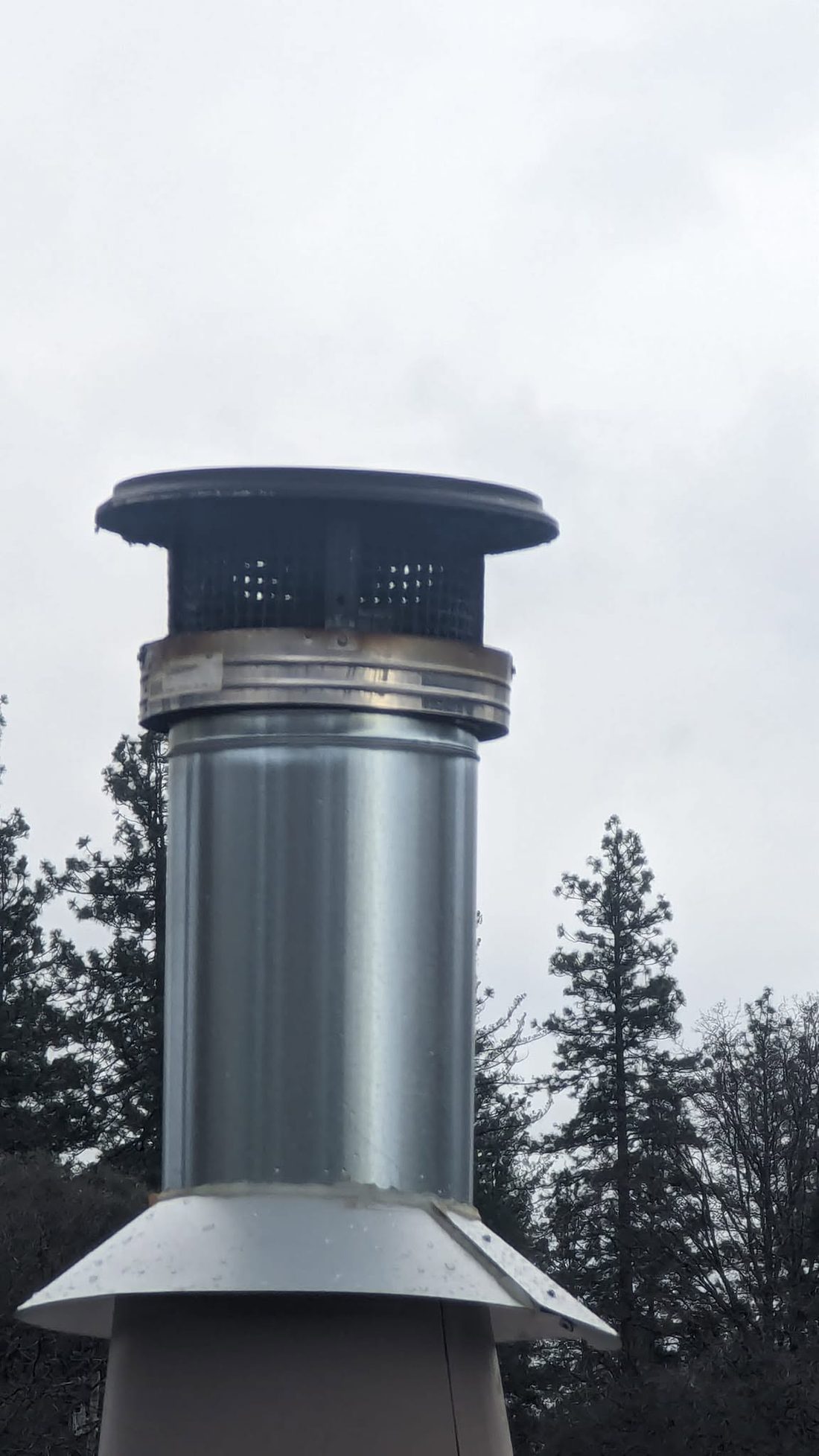
An odor may seem to come from the fireplace even when the source is in the chimney, chase, surrounding wall or room. A musty smell after a summer downpour may suggest moisture or debris. A smoky odor in a unit that shares a chimney structure with a wood-burning flue may require examination of the appropriate passage and damper. A gas appliance with a vent termination outdoors may need that termination checked for obstruction or damage.
None of these possibilities can be confirmed by smell alone. Air movement in a house can carry odors across rooms. Exhaust fans, closed doors and air conditioning can change where a person notices the smell, but do not try to “test” the appliance by changing household settings if you suspect gas or carbon monoxide. Stop using it and arrange a professional assessment.
A useful inspection looks at the appliance and its venting as a system. It should not begin with a promise that every smell can be removed by cleaning glass. Cleaning may be part of maintenance, but it does not repair a gas leak, blocked vent or damaged component.
What to say when you call
Explain whether you have a gas log set, a built-in gas fireplace or a unit you are unsure how to identify. Give the make and model if you can read them without removing anything. Say when the odor started, what it resembles, whether the unit is currently off and whether any alarm has sounded. Tell the office if there was recent exterior work, heavy rain or a period when the house was unoccupied.
It is equally useful to say what you do *not* know. You do not need to insist that the pilot is bad or that the vent is blocked. A short, accurate description keeps the assessment open to more than one cause. If the smell is strong or suggests a gas leak, do not use a website form as your first step. Leave, call 911 and contact the utility from outside.
If the issue is non-emergency and the unit is off, ask what the visit will examine and whether the person servicing it works on that brand or type. Some systems need model-specific components. If the equipment is older, a replacement decision should follow an explanation of its condition, parts availability and venting requirements.
Questions a good service visit can answer
The first question is whether the appliance can be evaluated safely and whether it should remain off. Next is whether the symptom can be traced to the unit, the vent, moisture nearby or another source. Then come the practical options: cleaning and maintenance, a specific repair, a replacement component or a larger equipment decision.
Ask for a plain-language explanation of the finding. “The control is bad” is less helpful than knowing which test or observation supports that conclusion and what the repair changes. If the recommendation includes a new unit, ask about compatibility with the opening and vent system, any needed permits or qualified trade work, and what is excluded from the quote. Avoid committing to a change in fuel or vent style based only on a picture of an attractive fireplace.
You can keep a simple record of the visit: model number, symptom, what was checked, the recommended work and any instruction not to use the unit until more work is done. This is especially useful for a seasonal home or a property with several people managing maintenance.
A short note about what an odor cannot tell you
People sometimes ask whether a gas fireplace is safe because the flame is blue, the glass looks clean, or the odor fades after a few minutes. None of those details is a complete test. A flame's appearance can vary by product, and a problem in a vent or control may not show itself from the couch. Conversely, an odor from paint or household material elsewhere in the room can be mistakenly blamed on the fireplace. A qualified service visit is the place to separate these possibilities. If you suspect a gas leak or an alarm sounds, leave first; do not wait to collect more observations.
A South Florida reminder
A fireplace can sit still while the weather around it changes. Months of humidity, frequent rain and long periods without use make an annual maintenance conversation worthwhile even when the unit looked fine last winter. That is a reason to assess *your* fireplace, not a claim that every home has the same defect.
If the smell is urgent, leave and call emergency responders and the gas utility. If it is a non-emergency odor from an inactive unit, keep it off and request an inspection. Describe the symptom; do not take the system apart. Edison Chimney Services can discuss next steps at 954-408-2734 or through the service form once the immediate safety question has been resolved.
This guide is general information for South Florida homeowners, not a diagnosis of your specific system. If a fireplace shows smoke indoors, an unusual odour or any sign of unsafe operation, stop using it and request an assessment.