Seasonal Home Care
Birds, Debris and the Fireplace: Preventing Chimney Entry Responsibly
Hearing movement in a chimney or finding twigs in the firebox calls for caution. Learn the difference between an obstruction, wildlife issue and future prevention.
Start by leaving the fireplace off
Twigs on the hearth, scratching in the flue or a fluttering sound above the damper can be unsettling. The immediate response is simple: do not light a fire. Heat and smoke are not a humane or safe way to remove an animal, and burning debris in a flue can create a hazard. Keep the fireplace closed off from casual use while you arrange an assessment.
It is not always an animal. Wind can move debris through an uncapped opening. A damaged cap can leave pieces of material loose. A noise may be elsewhere in the wall or roof. Describe what you heard, when it happened and what you actually saw. A photograph of twigs or debris is helpful; climbing onto the roof to inspect a nest is not.
In Florida, some birds and active nests are protected. Wildlife rules depend on the species and situation. A chimney company should not promise to remove every nest immediately without identifying the circumstances. The Florida Fish and Wildlife Conservation Commission has guidance on permits for certain bird-related actions. If there is active wildlife, a qualified wildlife specialist may need to be involved before animal entry prevention work is installed.
Why a fireplace opening attracts trouble
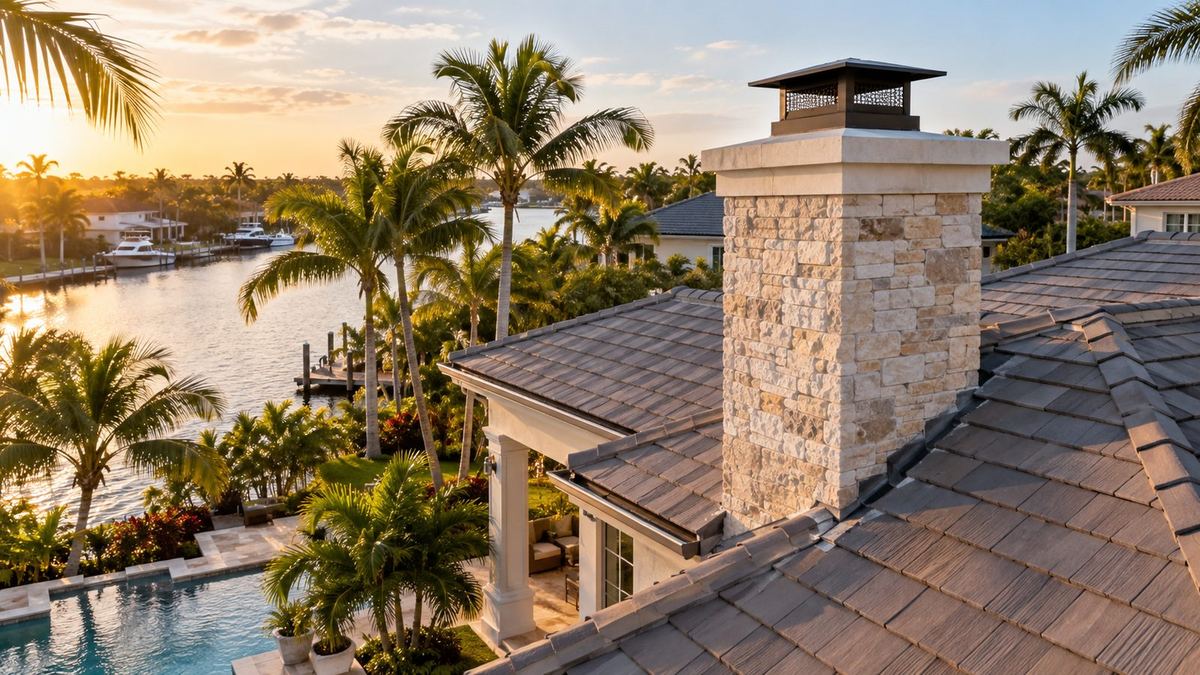
An open chimney is a route from the roof toward a sheltered space. Leaves can blow in; small animals may explore; birds may try to use an opening. A cap with suitable screening can help reduce entry for an appropriate system, but it does not make the whole chimney maintenance-free. Screen design also has to suit the vent and be inspected for deposits or damage.
Masonry chimneys and factory-built vents have different top assemblies. A guard that looks right for one may be unsuitable for another. The appliance served by the flue matters. If you have gas logs or a factory-built gas fireplace, tell the professional; do not accept an arbitrary mesh cover selected for a wood-burning chimney.
A top can be missing after high winds or may have been left open during previous work. If you have old photos, compare them from the safety of the ground. A zoomed image can show that something changed even when it cannot reveal the condition inside the flue.
What an assessment should separate
There are three separate questions. Is something alive inside now? Is there debris or a blockage in the passage? What allowed material to enter, and how can future entry be reduced? These questions may require different people and different work. A company that only sells a cap may not be equipped to resolve active wildlife. A wildlife specialist may not inspect the chimney for damage or suitability for a fire afterward.
Ask what can be seen without disturbing a protected animal. If a nest or obstruction is removed lawfully, ask whether the flue needs chimney inspection and cleaning before use. Material left lower down can matter even after the opening is covered. A new cap over an unchecked flue may hide the problem rather than solve it.
The size and location of the obstruction also matter. Do not push a rod up from the firebox or use a vacuum hose to “see how far it goes.” You may compact material, injure an animal or damage an appliance. Let the qualified professional choose the method.
A cap is prevention, not an eviction tool
Once the opening is confirmed clear and any wildlife situation has been handled, chimney cap installation may be a sensible part of a prevention plan. The cap should fit the flue and appliance, be secured to a sound surface and allow the vent to work as designed. Screening is not a substitute for selecting the right top for the fuel and equipment.
If you already have a cap, ask why entry occurred. Is the screen torn? Is the cap displaced? Was another flue left open? A multi-flue chimney may have more than one opening. Repairing the actual entry point is more useful than adding hardware to the one spot that is easiest to reach.
After installation, retain a photograph and note the material. Regular exterior checks from the ground may reveal a tilted cap after a storm. A professional inspection can look more closely when appropriate. Do not assume “covered” means “never needs another look.”
South Florida timing and property use
Warm weather means a fireplace may sit quiet for months. That can give debris or animal activity time to go unnoticed. A seasonal homeowner may return for a cool weekend and discover the issue only while preparing to light a fire. Plan a check in advance rather than turning the first use into an experiment.
After storms, take a safe ground-level look for a displaced top or pieces in the yard. Wind can affect roof components even if the living room appears untouched. If the fireplace is in a condo or a managed property, find out who controls the roof and whether the association must authorize access. That practical step can matter as much as choosing a cap design.
Do not turn this into a blanket claim that every South Florida chimney has a nest. Many do not. The local lesson is that an unused flue and a weather-exposed top deserve attention when there is a real sign of entry.
If an animal enters the room
Stay calm, keep people and pets away, and follow advice from an appropriate wildlife professional or local authority. Do not corner the animal or try to handle it with household gloves. A fireplace screen or closed door may help limit movement if it can be done without putting anyone at risk. Different species require different responses and some require special handling.
If you suspect a gas appliance vent is blocked, keep the appliance off. If a carbon monoxide alarm sounds, leave and call emergency services. No amount of nest removal by a homeowner substitutes for evaluating a fuel-burning system after a suspected obstruction.
When the immediate situation is resolved, document what entered, what was removed and what was inspected. This prevents confusion later about whether the flue was only cleared or actually evaluated for use.
What the homeowner should avoid ordering online
A universal “chimney bird guard” may look inexpensive, but a top cannot be chosen by mesh size alone. It must fit the opening and the equipment served. A guard that restricts venting or traps deposits can create another problem. Some factory-built systems need an approved termination rather than an improvised screen. Bring the product idea to a professional if you like, but ask whether it is suitable for your actual chimney.
Also avoid sealing an opening while activity is still heard inside. The aim is to keep future wildlife out after the passage is clear and lawful handling is complete, not to trap an animal. If someone offers to cover the flue immediately without checking for active wildlife or debris, ask how they know the passage is ready to be closed. A careful answer protects the system and the animal.
What if the fireplace has already been used?
If someone lit a fire before noticing debris or animal activity, stop using the fireplace and let the unit cool. Do not try to clear the blockage with another fire. A professional may need to check both the firebox and the passage above it for deposits, nesting material, damage or an obstruction. Explain the timing honestly: when the last fire was lit, what you heard or saw, and whether smoke entered the room. Those details help determine the scope of the visit.
For a gas appliance, do not assume a different vent means wildlife cannot get in. The termination still needs to be appropriate for that specific product, and any obstruction or damaged cover should be evaluated without altering the appliance by guesswork. If an animal is present, the approach also depends on what it is and whether it is protected. Ask how the wildlife issue will be resolved before the opening is closed. Once it is clear, prevention can focus on the right cap or termination and on a follow-up check after storms.
Questions for the prevention visit
Which opening allowed entry? Is the flue clear all the way through? Are there other openings? What top is approved for the actual appliance? Will the screen be accessible for inspection? Was the existing cap damaged by wind or corrosion? Is any wildlife action regulated in this situation? These questions connect the proposed hardware to the real problem.
A useful estimate separates wildlife handling, removal of debris, chimney evaluation and installation of a guard. It should not imply that a cap alone handles all four. For a home with multiple fireplaces, identify which flue belongs to which room before the top is modified.
Edison Chimney Services can discuss a chimney opening and the appropriate inspection and prevention steps. If active wildlife is involved, the plan may include a qualified wildlife specialist. Call 954-408-2734 or use the form with your ZIP code and a description, while keeping the fireplace off.
This guide is general information for South Florida homeowners, not a diagnosis of your specific system. If a fireplace shows smoke indoors, an unusual odour or any sign of unsafe operation, stop using it and request an assessment.