Seasonal Home Care
A Pre-Storm Look at the Chimney from the Ground
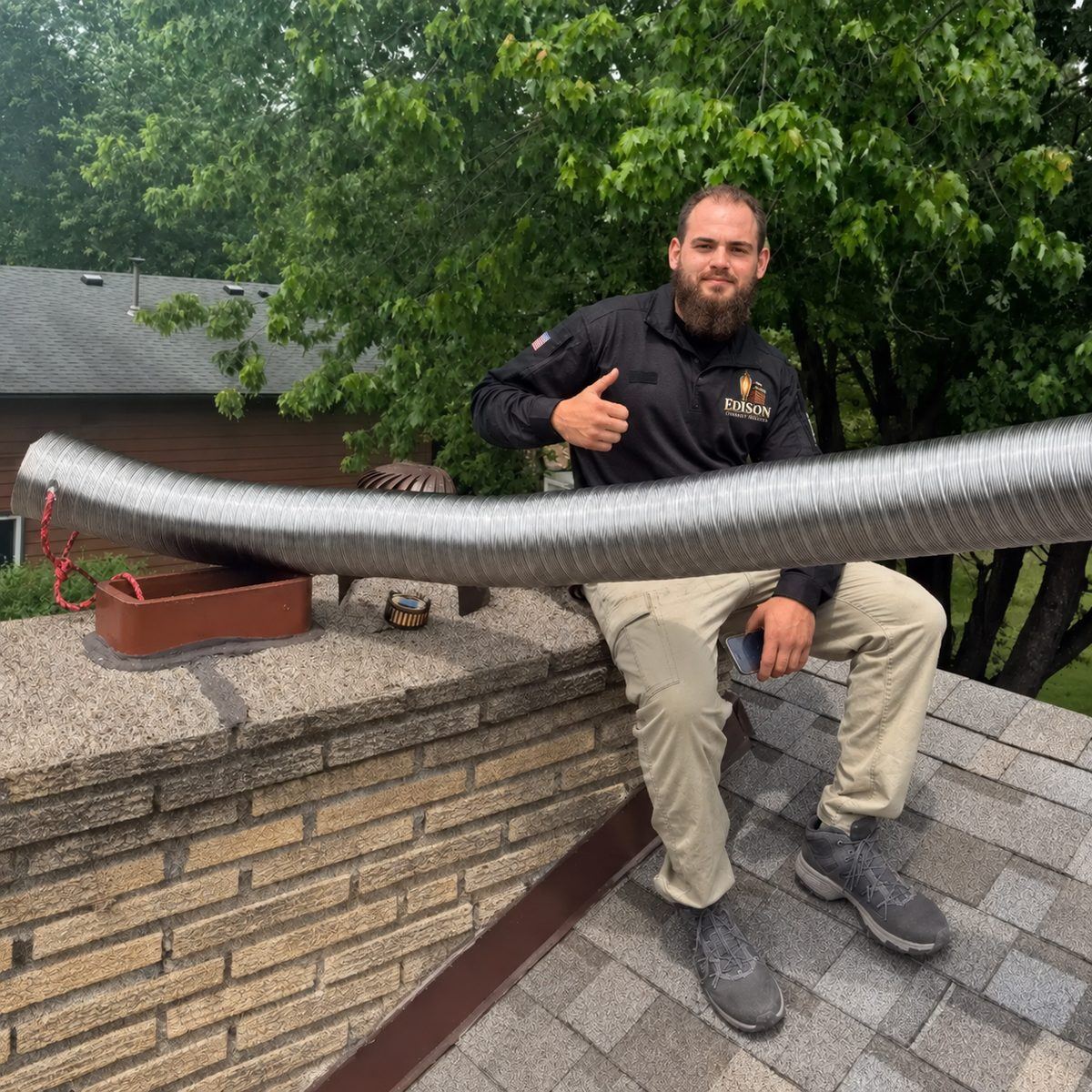
Before storm season, a few safe observations can help you spot changes later. Leave roof work to professionals and keep the fireplace off if damage is suspected.
Preparation can begin without a ladder
Before storm season, many homeowners check shutters, drains and loose items around the house. A chimney or fireplace vent deserves a look as part of the exterior, but that does not mean climbing onto the roof. A ground-level photograph on a clear day can establish how the top, cap, chase and nearby roof looked before severe weather. Keep it with your home records.
Stand where you can see safely. Is a cap present? Does anything appear tilted, missing or loose? Are there rust streaks down a chase or masonry pieces on the ground? A camera with zoom may help. If the chimney cannot be seen from the yard, do not force a view by leaning out a window or walking onto a fragile roof. The absence of a useful photo is not a reason to take a fall risk.
The purpose is comparison, not diagnosis. A visible defect may justify chimney inspection before conditions worsen. A neat appearance from the street cannot establish that the flue, crown or flashing is sound.
Know the components without trying to service them
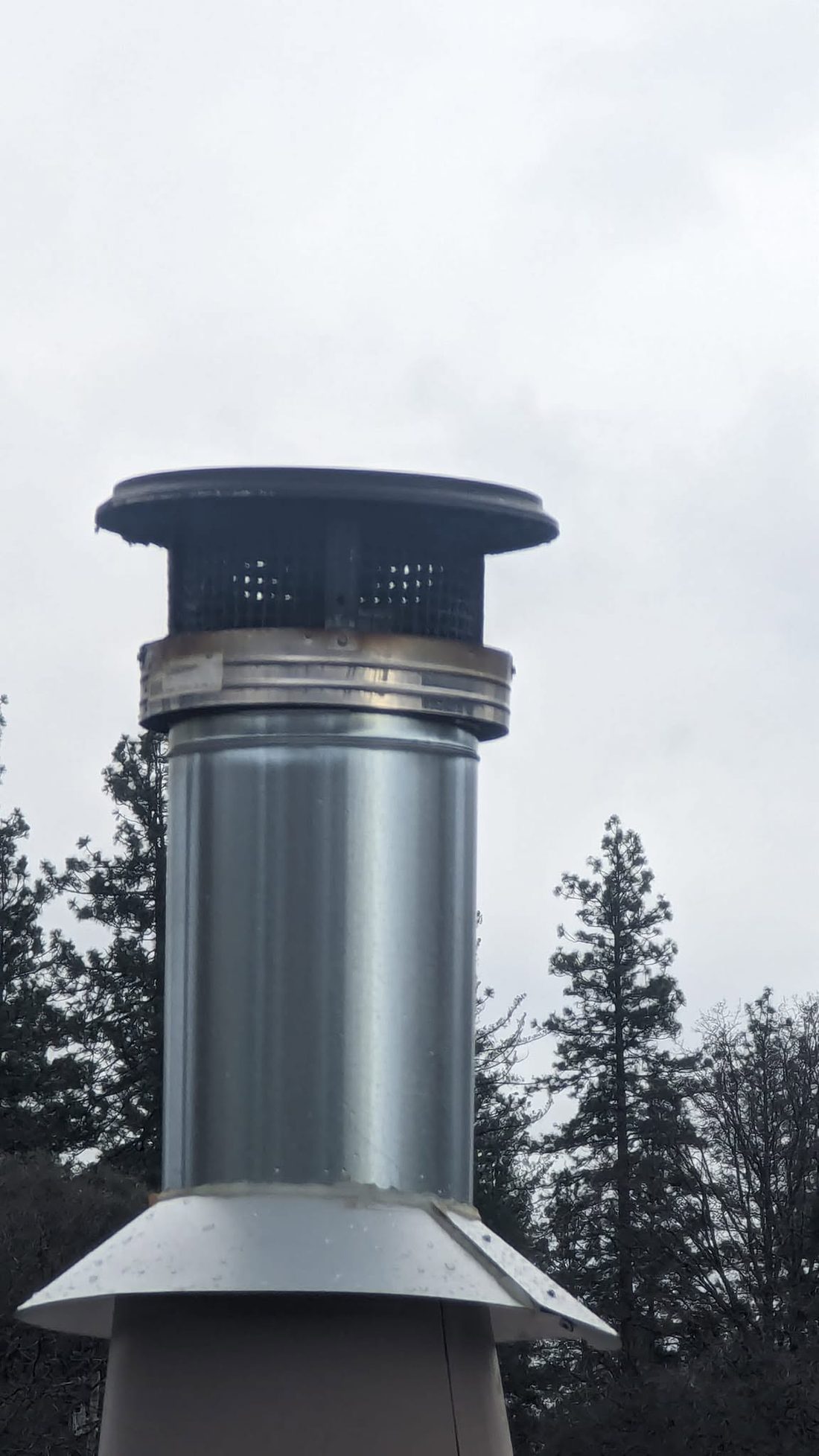
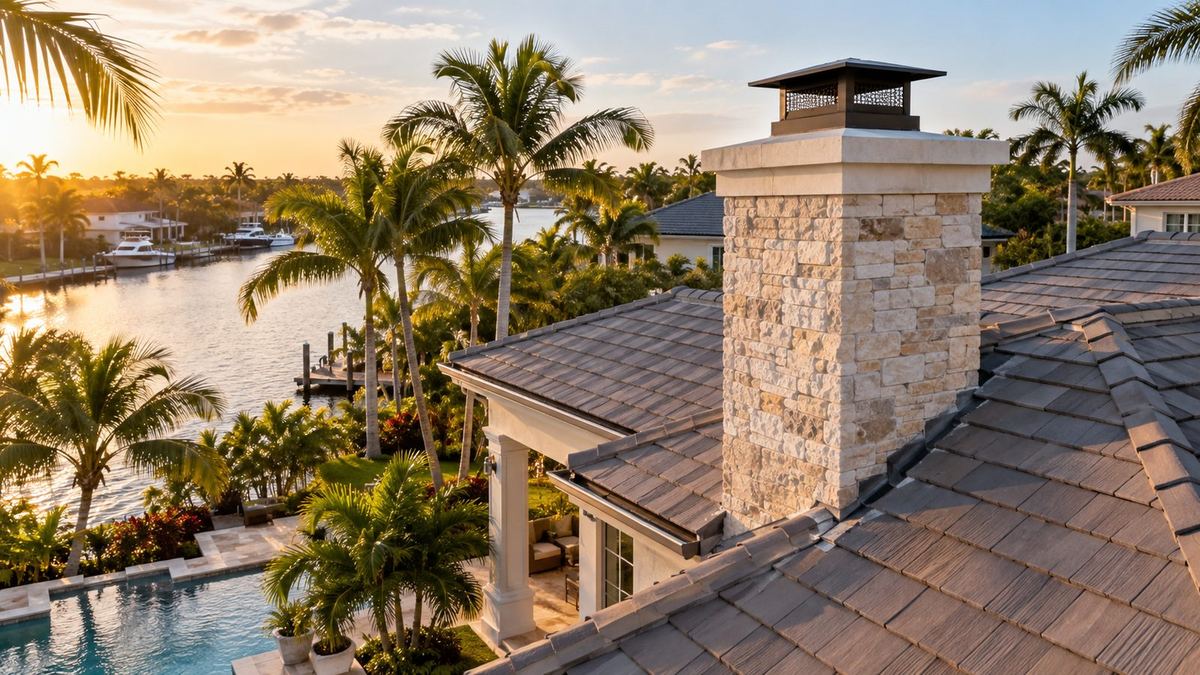
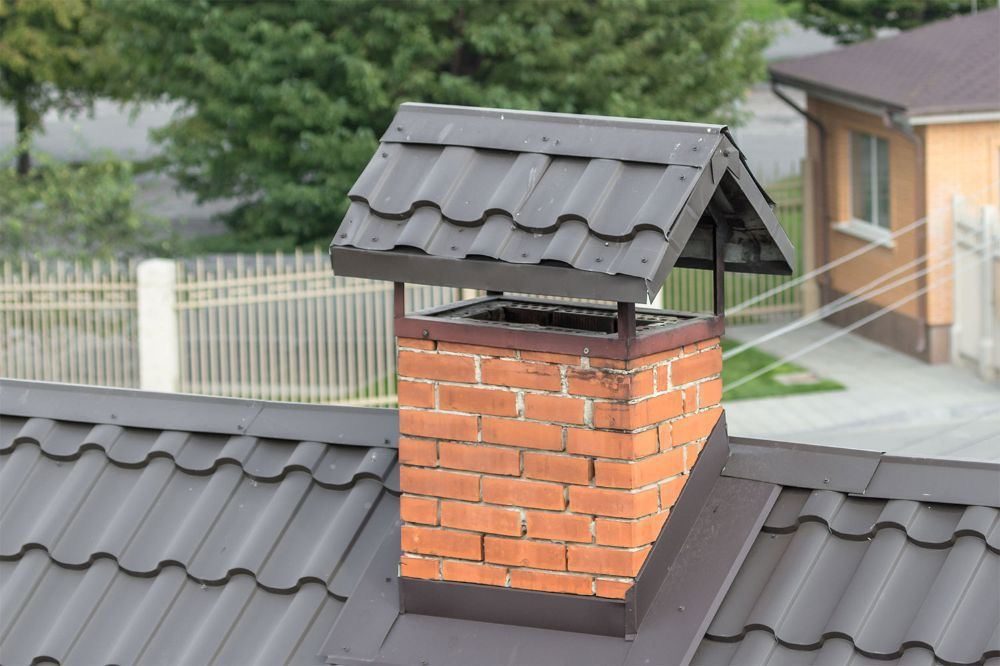
On a masonry chimney, the cap protects the flue opening and the crown covers the top around it. Flashing addresses the roof joint. On a framed chase, a metal cover may span the top around a factory-built vent. You may see only some of these from the ground. Make a note of what is visible rather than assuming a hidden part is fine.
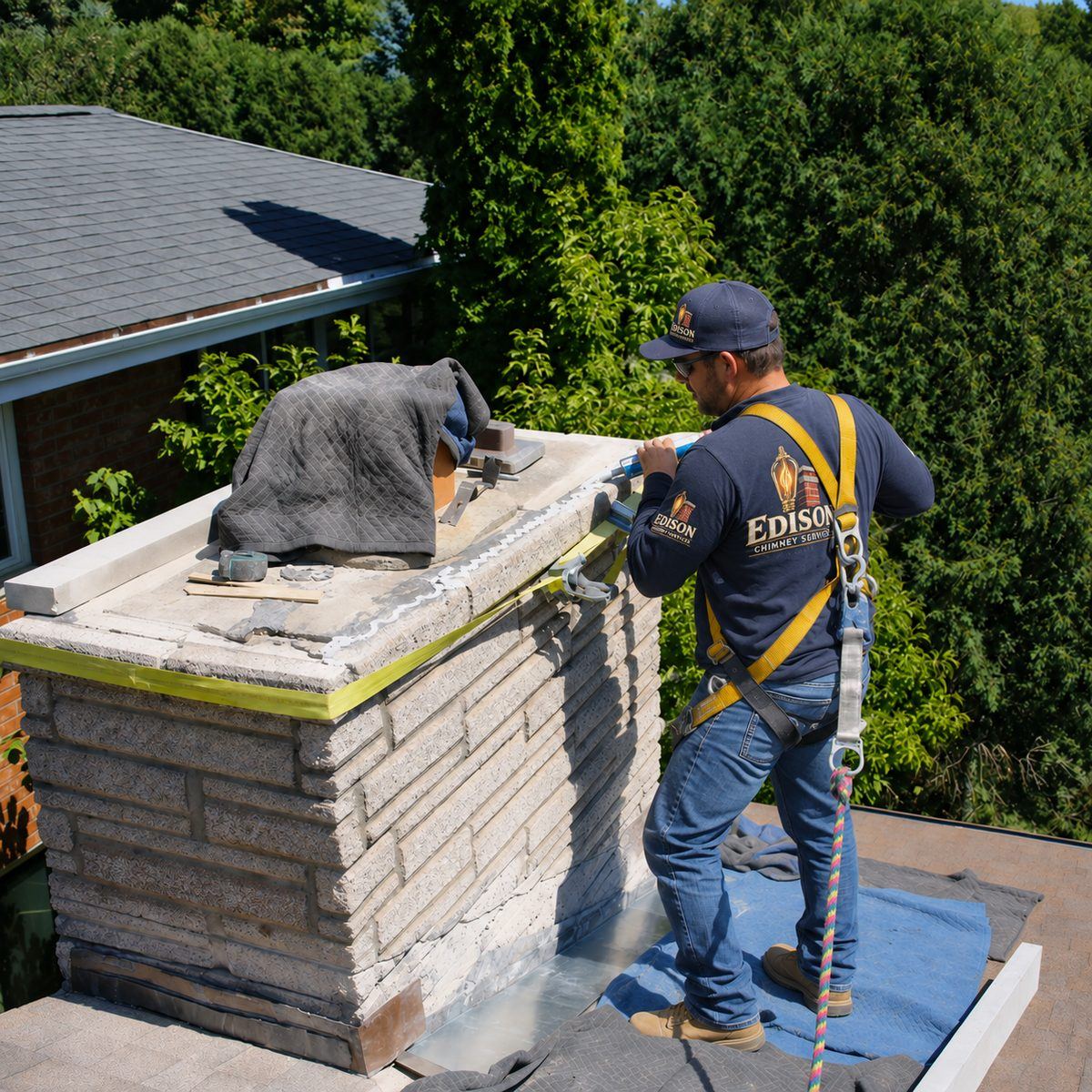
If a cap was already loose, ask for professional attention while safe weather allows. Chimney cap installation or repair may be part of a plan, but the top surface and mounting point must be assessed. Do not tie a cover down with an improvised cable or put a tarp against a vent. These are not ordinary outdoor ornaments.
Tell the company what appliance the vent serves. A wood chimney and a gas fireplace termination may require different parts. A service photograph from an earlier visit can help identify what is installed.
Why the pre-storm photo matters
After heavy wind, it is easy to remember that “something looks different” without knowing what changed. A dated photo gives you a reference. Take a wide view that shows the roof and chimney location, then a zoomed view if possible. Keep the date with the images. If a professional has previously documented the crown or chase cover, preserve those photos too.
A photo is also helpful for an insurance or maintenance conversation, although it is not proof of when every defect began. Do not create a claim about storm damage from a rust stain that existed before the storm. A clear record supports an honest timeline.
For a seasonal property, share the safe-photo plan with the person who checks on the home. They should not be asked to climb a roof after a storm. Their role is to notice visible change, indoor water and potential safety concerns, then contact the appropriate professional.
After the storm, wait for safe conditions
Do not go outside during dangerous winds or approach downed electrical lines, damaged trees or unstable structures. Follow local emergency instructions first. When it is safe to look from the ground, compare the top with your earlier photo. Note a missing cap, fallen metal, new masonry pieces or shifted flashing visible from a safe position.
Inside, look for new water marks, wet firebox material, a musty smell or debris. Do not light a fire to “dry out” the chimney or check whether it still drafts. If there is suspected damage or water intrusion, keep the fireplace off until it is assessed. Chimney leak repair begins with identifying the entry path, which may involve roof components as well as chimney parts.
A gas odor is an emergency: leave the area and call 911 and the gas utility from a safe location. A carbon monoxide alarm also requires immediate action. An ordinary web form is for non-emergency service questions, not these situations.
Rain can reveal old problems too
A storm may be the first time a pre-existing weakness becomes visible. A cracked crown or worn roof joint may leak only under wind-driven rain. That does not automatically mean the storm created the defect. The repair still needs to address what is there now. Share the timing and any prior stains with the inspector.
South Florida's wet season brings frequent showers even without a named tropical system. A mark that appears repeatedly after ordinary rain warrants attention before storm season intensifies. Waiting for a dramatic event can let moisture affect more material.
Do not paint over a stain before recording it. Photograph its outline and date. If the area is near an electrical fixture or ceiling material is sagging, address that immediate building safety issue promptly.
Ask for an inspection that fits the event
Tell the professional what happened: the date, winds or rain you experienced, what changed in photos and whether water entered. Ask what can be safely inspected on the roof and from the room. A small visible cap shift and a chimney struck by a falling limb may call for different scopes. The inspector should not treat every storm concern as a routine cleaning.
A written finding should separate cap, crown, flashing, masonry, chase and appliance condition. If roofing work is needed, ask who handles that part. If a factory-built vent was damaged, confirm replacement components are suitable for its model. Avoid a universal “storm package” that cannot tell you what is actually damaged.
Keep the after-repair photographs and invoice. They provide a new baseline for the next season. They also help if someone else will manage the property while you are away.
Before the forecast becomes urgent
A scheduled exterior visit is easier when weather is calm and access is safe. If a cap has been tilted for months or a chase cover shows obvious sagging, ask for an inspection before a storm watch rather than waiting for a crew to work during unsafe conditions. The goal is ordinary maintenance planning. No contractor can promise that a chimney will be unaffected by a future storm.
Keep the chimney photo with other home records and the appliance manual. If you have a masonry chimney and a factory-built gas vent on the same property, label which picture belongs to which system. After a storm, a technician can compare the same view. If there is no visible change but a new indoor stain appears, report both facts. It may direct attention to a joint that cannot be seen from the yard.
Work with the right people afterward
A fallen tree, damaged roof covering and displaced chimney top may require several trades. Ask the chimney professional to describe the components within their scope and coordinate roof repair with a qualified roofer. If a gas line or appliance has been affected, emergency utility and qualified gas work may be needed. The order should follow immediate safety and access conditions, not a generic marketing checklist.
If a technician cannot inspect the roof because of debris or unstable conditions, the report should state that limit. A temporary protection step, if recommended by a qualified professional, is different from a final repair and should be documented as such. The homeowner should not interpret a quick visible fix as clearance to use the fireplace. Ask for the inspection result and explicit operating guidance once access is safe.
Keep an insurance record without turning it into a diagnosis
Before hurricane season, photographs of the chimney from the same safe ground position can show what the visible top and sides looked like. Date them and keep them with ordinary property records. After a storm, take fresh pictures only when it is safe to go outside. A tilted cap, missing cover, displaced brick or new stain is a reason to seek an appropriate inspection. The photographs may help describe a change, but they cannot reveal concealed structural or vent damage.
If you are discussing a possible claim, ask the relevant insurer what records it requires and keep invoices and inspection notes together. A chimney contractor can describe observed conditions and proposed work; coverage and cause determinations belong to the insurer and other appropriate professionals. Do not ask a crew to describe an old condition as new storm damage. The honest timeline makes later decisions clearer and protects the usefulness of the record.
Repairs after a storm may involve both roof and chimney trades. Ask which professional is responsible for temporary water protection, permanent roof details and the chimney components. If someone offers a fast patch while weather is still unsettled, request a written explanation of whether it is temporary. Avoid operating the fireplace until any damaged vent or appliance has been evaluated.
The safe checklist
Before severe weather: photograph from the ground, note existing stains and keep appliance information handy. Afterward, when officials say it is safe: compare the exterior from the ground, check for new indoor water and keep the fireplace off if a component appears damaged. Leave roof access, vent inspection and repairs to qualified professionals.
This simple habit will not prevent every leak. It can make the next conversation more accurate. Edison Chimney Services can discuss a non-emergency chimney concern at 954-408-2734 or through the form with your ZIP code and dated observations.
This guide is general information for South Florida homeowners, not a diagnosis of your specific system. If a fireplace shows smoke indoors, an unusual odour or any sign of unsafe operation, stop using it and request an assessment.