Rain & Leaks
Can Chimney Waterproofing Stop Every Leak?
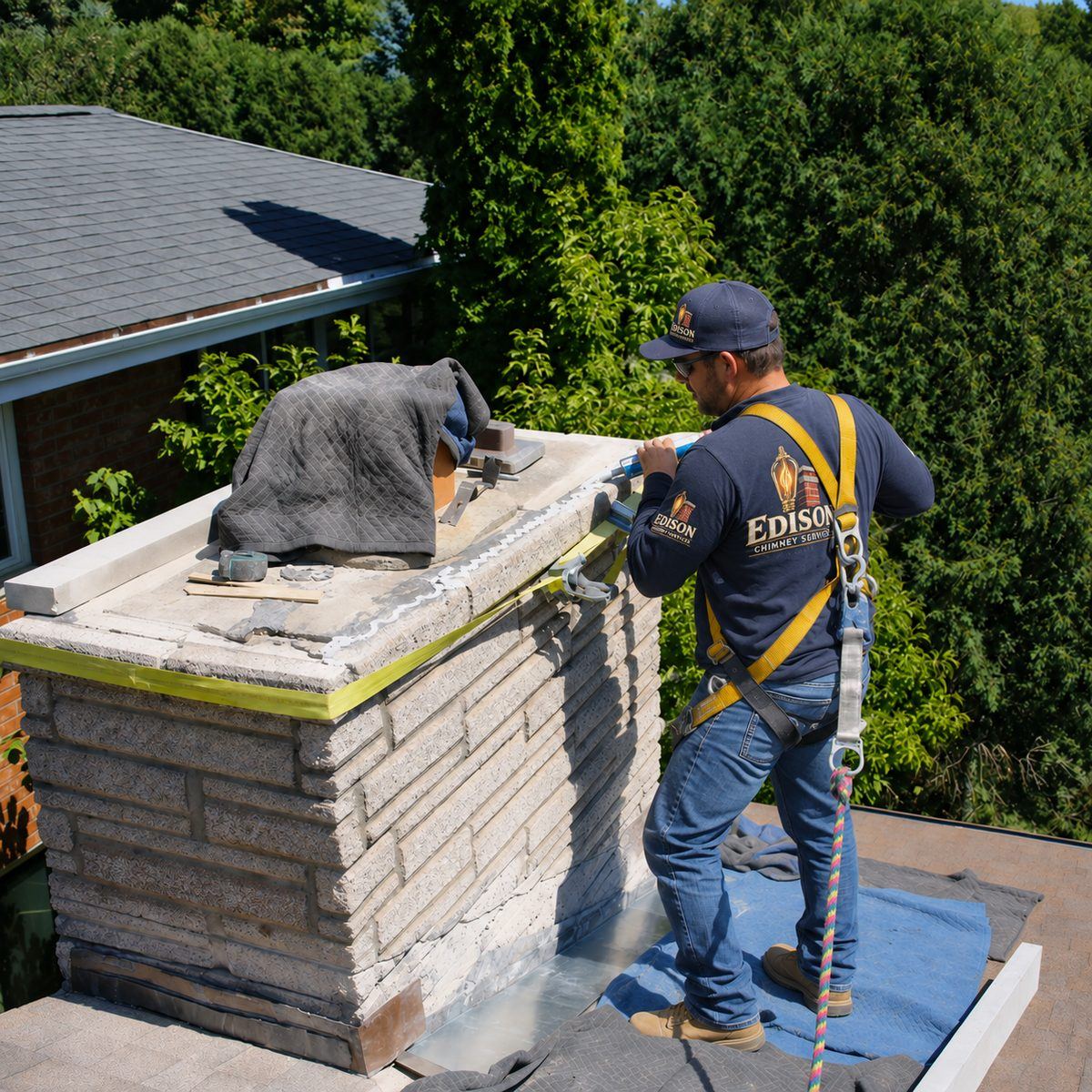
Water repellent can have a role in protecting suitable masonry, but it cannot fix a broken crown, flashing or missing cap.
A useful product cannot replace a diagnosis
When a fireplace wall develops a stain after rain, “waterproof the chimney” sounds like a simple answer. The trouble is that water can enter at a cap, crown, damaged mortar, flashing, chase cover or roof detail. A treatment on masonry cannot repair a missing metal part or a failed roof joint. It may also be inappropriate for some surfaces.
Chimney waterproofing can be worth discussing when sound, suitable masonry is exposed to rain. The word should describe a specific treatment on a suitable surface, not a promise that every leak will disappear. Ask what the technician believes the water path is and why the proposed material addresses it.
South Florida's frequent warm-season showers make exterior moisture a practical concern. That is a reason to examine the chimney carefully, not to apply a coating to every brick stack on a schedule. An inland masonry chimney, a coastal chase and a roof joint are different problems.
Find the opening first
Begin with the symptom timeline. Does the stain show up after every rain, only after wind, or only after several wet days? Is the firebox damp? Are there rust marks outside? A technician can compare these observations with the crown, cap, mortar and roof connection. A professional inspection may reveal more than one defect.
If the crown is visibly broken, discuss chimney crown repair. If the roof joint is damaged, ask about flashing and roofing coordination. If a cap is missing, address that opening. Applying water repellent over brick while leaving a large entry point unchanged is like painting a wall while a window remains open.
A surface may also have hidden moisture from a past leak. Ask how the professional will judge whether it is ready for treatment. The product's instructions matter. Coating a surface without proper preparation may fail to perform as intended or make future diagnosis harder.
What a masonry treatment is trying to do
An appropriate water-repellent treatment is intended to reduce the amount of rain that masonry absorbs while remaining compatible with the material. Different products have different requirements. A masonry wall is not the same as a metal chase cover, a flue tile or a painted fireplace surround. A contractor should name the product and explain why it is suitable for the specific exterior material.
Preparation is part of the work. Loose mortar or spalling brick may need repair first. Old coatings can affect how a new product performs. The surface may need to be clean and dry within the manufacturer's limits. Ask what areas are included and which are excluded; the answer should be more specific than “the whole chimney.”
A treatment may reduce one route for rain without solving an unrelated path at the flashing or crown. If the estimate bundles several repairs, ask each one's purpose. That makes it easier to understand the cost and to evaluate the result after later rain.
Why “seal everything” can be poor advice
Homeowners may see cracks and think that filling every gap with a caulk gun is safe. Chimneys and appliances include joints that must function as designed, and different materials expand or move differently. A generic sealant at the wrong place can fail or interfere with a component. The correct repair depends on the specific part and product.
A thick surface film that traps moisture may also behave differently from a masonry treatment designed for the job. Do not assume more visible coating equals more protection. Ask the contractor about compatibility and follow the manufacturer's specifications. If someone proposes a treatment without identifying the masonry, existing finish or water source, ask for a clearer scope.
Chimney leak repair is a broader diagnostic task. Waterproofing may be one tool within a plan. It should not be the name used to avoid explaining where the water enters.
What a good proposal should include
The proposal should describe the surfaces to be treated, the product, preparation, defect repairs, access and any limitations. If the chimney has a cap, crown or flashing issue, list those separately. Ask whether the contractor has photographs of the condition before work. A future owner or inspector may need to know what product was used.
Price can vary with chimney size, access, extent of repair and materials. An estimate from one indoor photo cannot settle every detail. A written scope helps compare proposals: one bidder may offer surface treatment only; another may include repointing and crown work. They are not the same job.
Ask what you should watch afterward. The next comparable rain event is more useful than a sunny day for checking whether an indoor symptom returns. Keep dated photos of the same spot and report a persistent stain promptly.
When the answer may be no
A factory-built metal chase may not have masonry to treat. A chimney with major loose brickwork may need structural work before any surface treatment. A roof leak unrelated to the stack may require a roofer. A damp interior caused by room humidity may need a different investigation. A good professional should be willing to say that waterproofing is not the right answer to a particular problem.
Even on masonry, a treatment can have limits. The condition of mortar, the cap and the roof joint can change over time. No coating makes an exterior chimney exempt from inspection and maintenance. Ask how the treatment fits into an overall plan, not whether it guarantees zero future leaks.
If the fireplace has been wet inside, also ask whether its components need evaluation before use. A dry-looking wall after repainting does not prove the system is ready for a fire.
A case where waterproofing may be one useful part
Imagine a masonry chimney with sound brickwork, repaired joints, a suitable crown and no unresolved roof flashing issue. The exposed exterior still receives rain. A professional might recommend a product appropriate for that masonry to reduce absorption as part of maintenance. The choice should follow the product's surface and application instructions, and the estimate should identify exactly which faces will be treated.
Now imagine the same chimney with a missing crown edge and loose mortar. Applying the treatment first may make the wall look freshly serviced while water continues entering at the top. The sequence is different: determine the entry route, repair the damaged components and only then decide whether an additional masonry treatment is useful. These examples are not diagnoses of a particular home. They show why two “waterproofing” quotes can be very different.
Ask whether the chosen product changes the look of the masonry, how long the surface must remain suitable for application, and how adjacent roof or metal parts will be protected during work. Product instructions differ; a responsible contractor should be able to name the product and explain those details. If the chimney is already painted or coated, that history matters to compatibility. Keep a record of what was applied so future repairs are planned with the right information.
“Waterproof” is too broad a promise
An estimate may use the word “waterproofing” for very different work: applying a treatment to sound exterior brick, replacing a metal cover, rebuilding a crown or repairing the roof joint. Ask the contractor to replace that broad label with the component, material, area and expected purpose of each line item. It should be clear whether the work reduces absorption through masonry, closes a specific opening, or redirects water at a seam. These are related tasks, but they are not interchangeable.
Watch for the condition of adjacent materials. If mortar is loose, the wall surface may need repair before a treatment is considered. If flashing is separated, coating a brick face will not close the roof joint. If water is entering through an open top, the cap or crown may be the first issue. A photograph and a short written explanation let you revisit the logic later. Ask what observation after normal rain would suggest the work succeeded and what the contractor wants you to report if a stain returns.
There is also a timing issue in South Florida. A wet surface or an approaching storm may affect which exterior work can be performed well. Ask for the chosen product's application requirements rather than assuming every job can be completed as soon as a crew reaches the roof. Patience with the preparation is part of getting a meaningful result.
Make the choice in the right order
First, observe the symptom and inspect the possible entry points. Second, repair defects that are allowing water in. Third, decide whether a suitable masonry treatment adds useful protection. This sequence is easier to explain and evaluate than “spray everything and hope.”
Edison Chimney Services can inspect the chimney and discuss whether waterproofing belongs in the plan for your home. Call 954-408-2734 or use the request form with your ZIP code and when the moisture appears.
This guide is general information for South Florida homeowners, not a diagnosis of your specific system. If a fireplace shows smoke indoors, an unusual odour or any sign of unsafe operation, stop using it and request an assessment.