Rain & Leaks
Where Is That Chimney Leak Really Coming From? A South Florida Rain Checklist
A stain near the fireplace can come from several paths. Learn what to observe after a South Florida downpour and what a thorough inspection should check.
A ceiling stain is a clue, not a diagnosis
A mark above the fireplace often shows up after a heavy shower, then fades into the background once the wall dries. It is tempting to point at the nearest visible crack and call that the problem. Water rarely makes the decision so simple. It can enter at the top of a chimney, move through masonry, travel along the roof line or find an opening around a metal chase cover. The spot where water becomes visible inside the house may be some distance from where it first entered.
South Florida gives homeowners plenty of chances to notice the pattern. The warm season brings frequent showers and thunderstorms, and wind can push rain against details that stay dry during a lighter, straight-down shower. That does not mean every leak is caused by a storm. It means the *timing* of the stain is useful information. Take a photo when the mark appears, record the date, and note whether the rain was brief, prolonged or wind-driven. You can do all of that from the ground without climbing onto a wet roof.
If you see active water entering near electrical fixtures, sagging material or widespread ceiling damage, address the immediate safety concern and contact the appropriate professional promptly. For the chimney itself, chimney leak repair should begin with finding a credible water path. A coating applied over an unexamined problem may hide the symptom for a while without fixing the opening.
Path one: the cap and the open flue
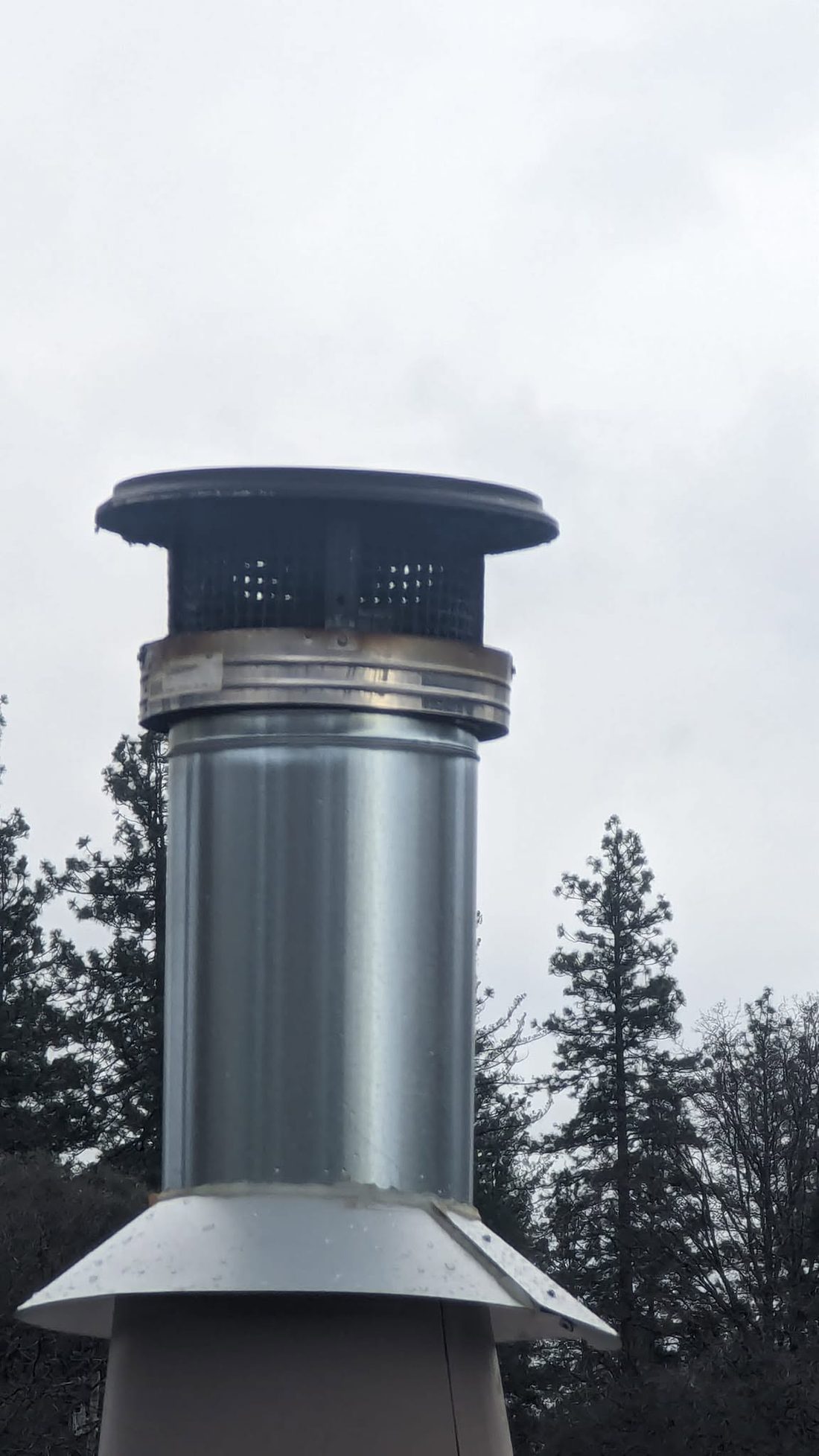
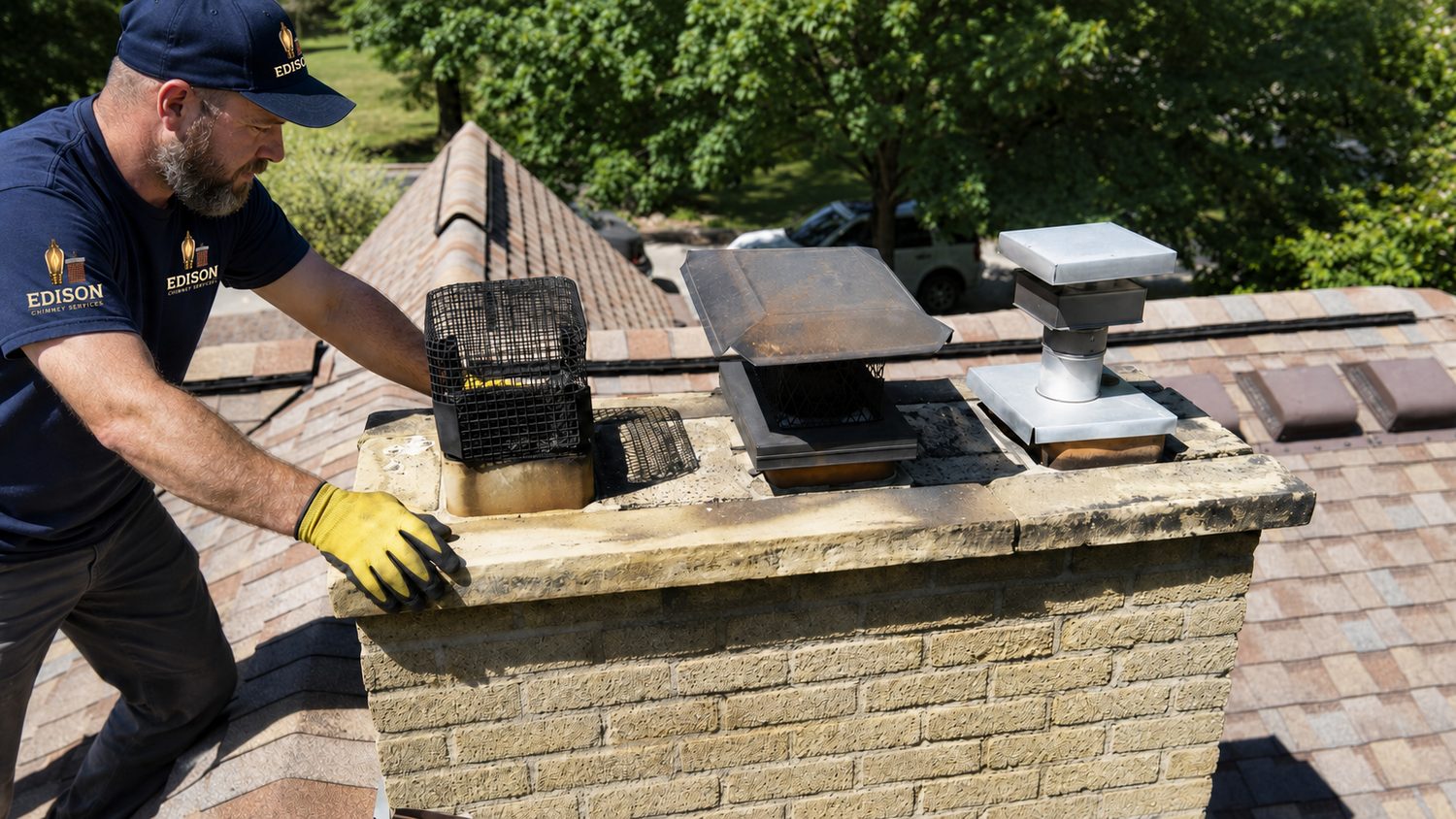
The cap sits at the top of the chimney and helps keep rain and debris out of the flue. A missing cap, an ill-fitting cap or damaged screening can leave the top more exposed. Look at the chimney from a safe place on the ground if you have a clear view, or use an older photo to see whether something changed. Do not try to reach the cap yourself. A roof visit is not a homeowner inspection step, especially after rain or high wind.
A cap problem may leave water or debris inside the flue and fireplace, but it does not automatically explain a stain beside the chimney. Water can reach several surfaces on its way down. The size and shape of the flue also matter when selecting a replacement. Chimney cap installation is a question of fit, materials and how the cap works with the particular vent, not just whether a metal cover looks close enough.
If you find leaves or nesting material in the fireplace, do not light a fire to “clear it out.” Ask for an inspection. A cap may be part of the answer after the flue is checked, but it cannot correct damaged masonry or roof flashing.
Path two: the crown at the top of a masonry chimney
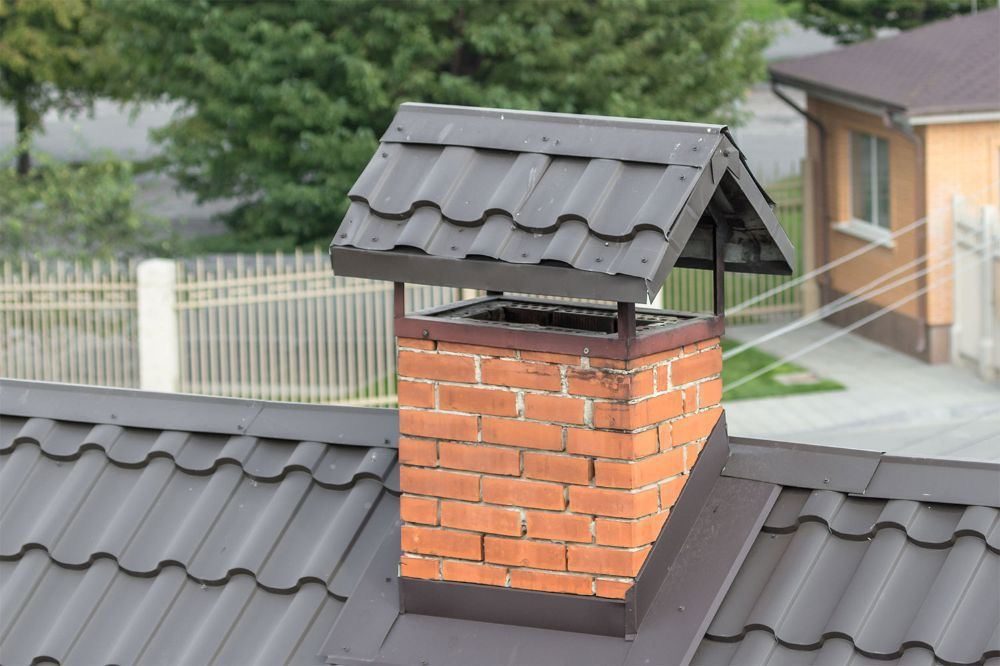
On many masonry chimneys, the crown is the top surface around the flue opening. It should direct water away from the masonry below. Cracks, gaps and deteriorated edges can let water reach places the crown was meant to protect. From ground level you may not see the crown at all. That is one reason an indoor stain cannot tell you whether the crown is sound.
The repair depends on the extent and location of the damage. A small surface issue and a crown that has lost its shape or edge are different situations. A professional should look at the crown, the flue opening and the masonry below before discussing chimney crown repair. Ask what portion is damaged and what the proposed work is meant to keep dry. That question is more useful than asking for a generic “seal.”
Also ask for photos if the top can be documented safely. Photos make it easier to understand a recommendation and compare the condition later. They do not replace an assessment of hidden water paths, but they can show whether a visible defect was actually addressed.
Path three: brick and mortar
Masonry is made of several materials joined together. A cracked brick, a worn mortar joint and a failed crown can all leave moisture where it does not belong. Salt air may add wear to exposed metal near the coast, but a home inland can have a leak too. The specific surface and the direction of the weather matter more than a blanket statement about the local climate.
Look for changes you can see safely: crumbling joints, staining on the outside of the stack or patches that seem to stay damp long after the surrounding wall dries. These clues can help a technician decide where to inspect. They are not proof that the visible joint is the only entry point. Chimney masonry repair may involve local work on damaged material, while a much broader pattern of failure can call for a different discussion. Applying water repellent to a cracked or loose surface before fixing the defect is unlikely to be a complete plan.
One practical question for an estimate is, “What is the water doing before it reaches this damaged area?” A clear answer should connect the proposed work to the route the water is believed to take. If more than one route is plausible, ask how the work will be prioritized.
Path four: where the chimney meets the roof
Flashing is the system of metal details and roof connections that helps keep water from passing through the joint between roof and chimney. It is an obvious place to look when a stain appears near the chimney, but it is not automatically the culprit. A wet upper chimney can send water downward, and roof materials adjacent to the stack can have issues of their own.
The location of the interior mark, the slope of the roof and the direction of wind-driven rain can all guide an inspection. A technician may need to coordinate with a roofer if the roofing material itself is involved. Chimney flashing repair should be described in terms of the actual joint, not as a strip of caulk smeared around every visible edge. Ask whether the proposal includes the roof-side detail and how it will be checked after repair.
Avoid testing the area with a garden hose on your own. Uncontrolled spraying can put water in places ordinary rain would not reach and can confuse the diagnosis. Let the professional choose a safe, methodical way to investigate.
Make a small observation log before the visit
You do not need a technical report. A few notes can save time and help keep the diagnosis focused. Record where the stain starts, when it changes, whether the fireplace itself is wet, and whether you smell dampness after the rain stops. Take a wide photo that shows the room and a closer photo of the mark. If you have a safe outdoor view, take a photo of the chimney from the ground. An old listing or inspection photo may also help show what changed over time.
Tell the technician about recent roof work, painting, exterior repairs or a cap replacement. A change to one part of the system can affect where water goes. If the stain appears after every rain rather than only with wind, say that too. The goal is not to persuade someone of a specific repair before they arrive; it is to give them a reliable sequence of observations.
Ask the person assessing the chimney to distinguish visible facts from likely causes. “The crown has a crack” is an observation. “That crack is the source of the ceiling stain” is a conclusion that should fit the evidence. Sometimes more than one defect needs attention. Sometimes the first obvious defect is not the one causing the indoor symptom.
What a useful repair conversation sounds like
A helpful estimate names the part to be repaired, the condition that led to the recommendation and the limits of the proposed work. It should make clear whether the work addresses the cap, crown, masonry, flashing, chase cover or another component. If the stain has two plausible sources, ask whether further inspection could narrow them before you commit to a larger project.
Do not expect any honest professional to guarantee from one indoor photo that a leak is fixed forever. South Florida rain can reach a house from many directions. The better goal is a reasoned diagnosis, a repair tied to a specific defect, and a plan for what to watch afterward. Keep the before-and-after photos and note whether the stain changes during the next comparable rain.
A fireplace showing water damage also deserves a conversation about its condition before use. Moisture can affect components that are not visible from the room. If you are planning to light it after a long break, ask whether an inspection should come first.
The short answer
The likely source of a chimney-area leak can be the cap, crown, masonry, flashing, chase cover or nearby roof detail. The indoor stain alone cannot identify which one. Observe the timing, photograph what you can reach safely, and ask for an inspection that explains the water path before choosing a repair. Edison Chimney Services can discuss the symptoms and arrange the next step when you call 954-408-2734 or send your ZIP code through the form.
This guide is general information for South Florida homeowners, not a diagnosis of your specific system. If a fireplace shows smoke indoors, an unusual odour or any sign of unsafe operation, stop using it and request an assessment.