Masonry & Structure
Smoothing the smoke path above the firebox — a considered repair, done only after inspection shows it is warranted.
What is the smoke chamber, and when does smoothing it (parging) actually help the fireplace draft?
The smoke chamber is the transition area above the firebox, where smoke gathers and funnels up into the flue. Its shape and surface influence how smoothly the fireplace drafts. When the surface is rough, stepped or damaged, it can disturb that flow and contribute to a fireplace that drafts poorly or pushes smoke into the room.
Parging is the process of smoothing and repairing that surface. It is a legitimate repair when an inspection shows a rough or damaged smoke chamber is part of the problem — and it is not something to add by default without that evidence.
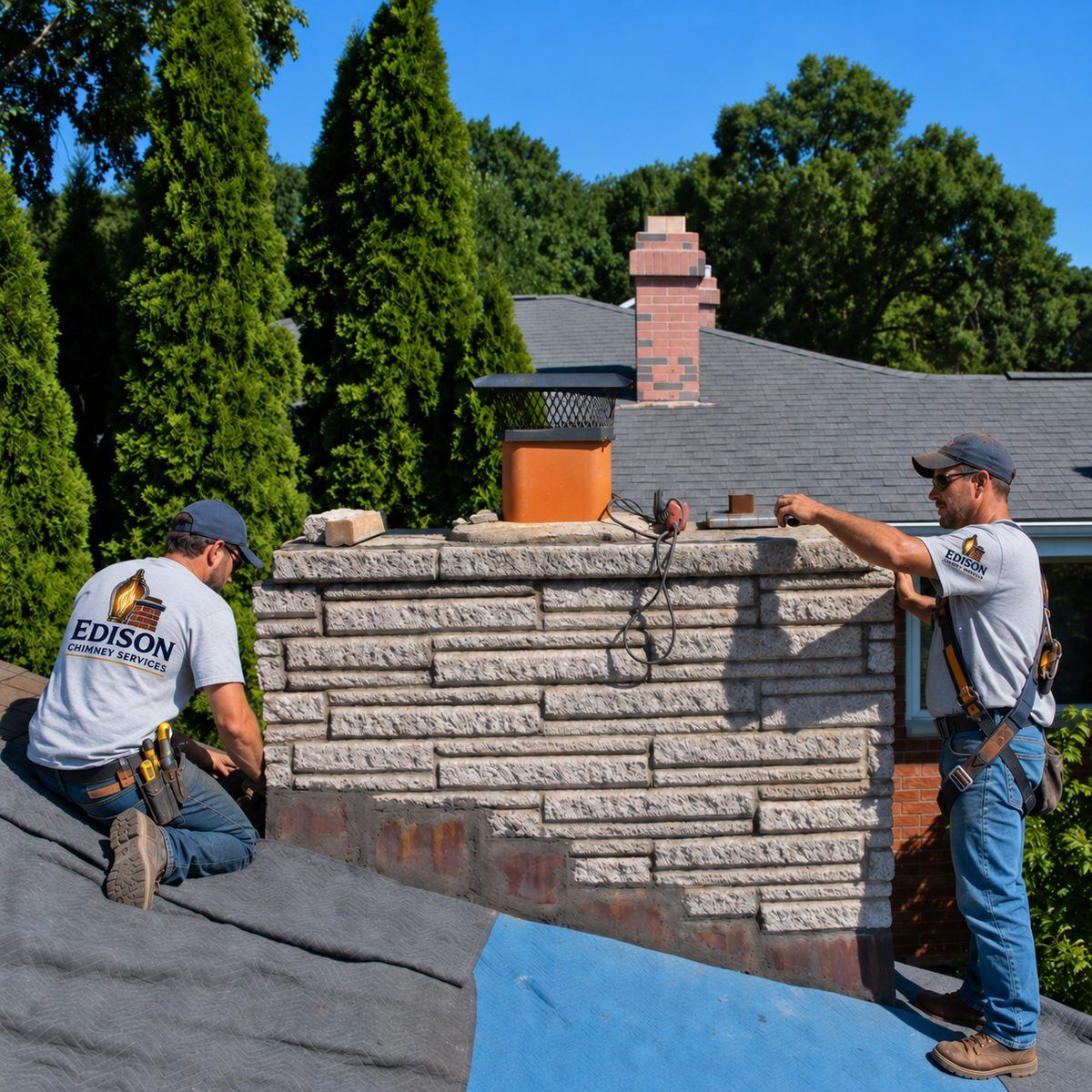
Above the firebox, the smoke chamber narrows from the wide fireplace opening toward the smaller flue. A well-formed chamber makes that transition smoothly, helping smoke accelerate upward. A chamber with a rough, corbelled or stepped surface — or with gaps and deterioration — creates turbulence that can work against the draft.
Because it sits out of sight above the firebox, its condition is established by inspection, not by looking up from the room.
Parging applies a smooth, appropriate coating to the smoke chamber surfaces, improving the flow and addressing surface defects. It makes sense when a draft or smoke complaint has been traced, at least in part, to a rough or damaged chamber — and when the inspection rules the chamber in as a contributing factor.
It does not make sense as a reflexive upsell. If the real cause of a smoky fireplace is a blockage, house pressure or a cap problem, parging the chamber would not solve it, and we’d point you to the actual cause.
Smoke chamber condition is one factor among several in how a fireplace drafts. A thorough look considers blockage, the cap and flue, house pressure from HVAC and exhaust fans, and the chamber together, so the recommended work matches the real limitation. When the chamber is genuinely part of the problem, parging is a durable improvement; when it isn’t, we say so.
Parging is a real repair, but it earns its place only after a draft problem has been diagnosed. Because a smoky fireplace can come from a blockage, from house pressure, or from the cap and flue, smoothing the smoke chamber can be the right answer or an expensive irrelevance depending on the actual cause. The order that keeps you from wasting money is: diagnose the draft, then decide whether the chamber is part of it.
When the chamber genuinely is contributing — rough, stepped or damaged surfaces disturbing the flow — parging is a durable improvement. When it is not, we say so and point you to the real limitation.
We don’t quote prices online because the right scope depends on the system. These are the factors that usually move an estimate:
If the fireplace pushes smoke into the room, stop using it until the draft problem — which may or may not involve the smoke chamber — has been diagnosed.
Before a smoke-chamber assessment, note:
It is smoothing and repairing the smoke chamber surfaces above the firebox with an appropriate coating, so smoke transitions more smoothly into the flue.
Only if a rough or damaged smoke chamber is actually part of the problem. Smoky fireplaces have several possible causes, so we diagnose before recommending parging.
Through inspection. The chamber sits above the firebox and out of view, so its condition is established by looking, not assumed.
Talk to a technician
You don’t need to know the name of every chimney part. Tell us what you notice, whether the system burns wood or gas, and your ZIP code. If a system shows signs it may be unsafe to use, stop using it until it has been evaluated.
Available 24/7 954-408-2734
