Masonry & Structure
Assessing the flue and the appliance first — so any liner is specified for the real system, not a catalogue price.
How do you decide whether a flue needs a liner repair, a new liner, or nothing at all?
The liner is the surface inside the flue that keeps combustion products contained and away from the surrounding structure. When it cracks, gaps or deteriorates, that containment is compromised — which changes how the system should be used. But those defects are hidden, so the honest starting point for any liner conversation is a look inside, not a quote.
A liner should be specified for your actual system: the appliance it serves, the fuel it burns, and the condition of the flue around it. A price quoted before anyone has seen the flue is a guess about the wrong question.
Because the flue is concealed, a camera inspection is the practical way to see its condition — cracks, gaps, offsets, deterioration or buildup. That look tells us whether the existing liner is sound, whether it can be repaired, or whether replacement is the right call. Specifying a liner without that information is putting the answer before the question.
It also tells us the size and path of the flue, which a replacement liner has to match.
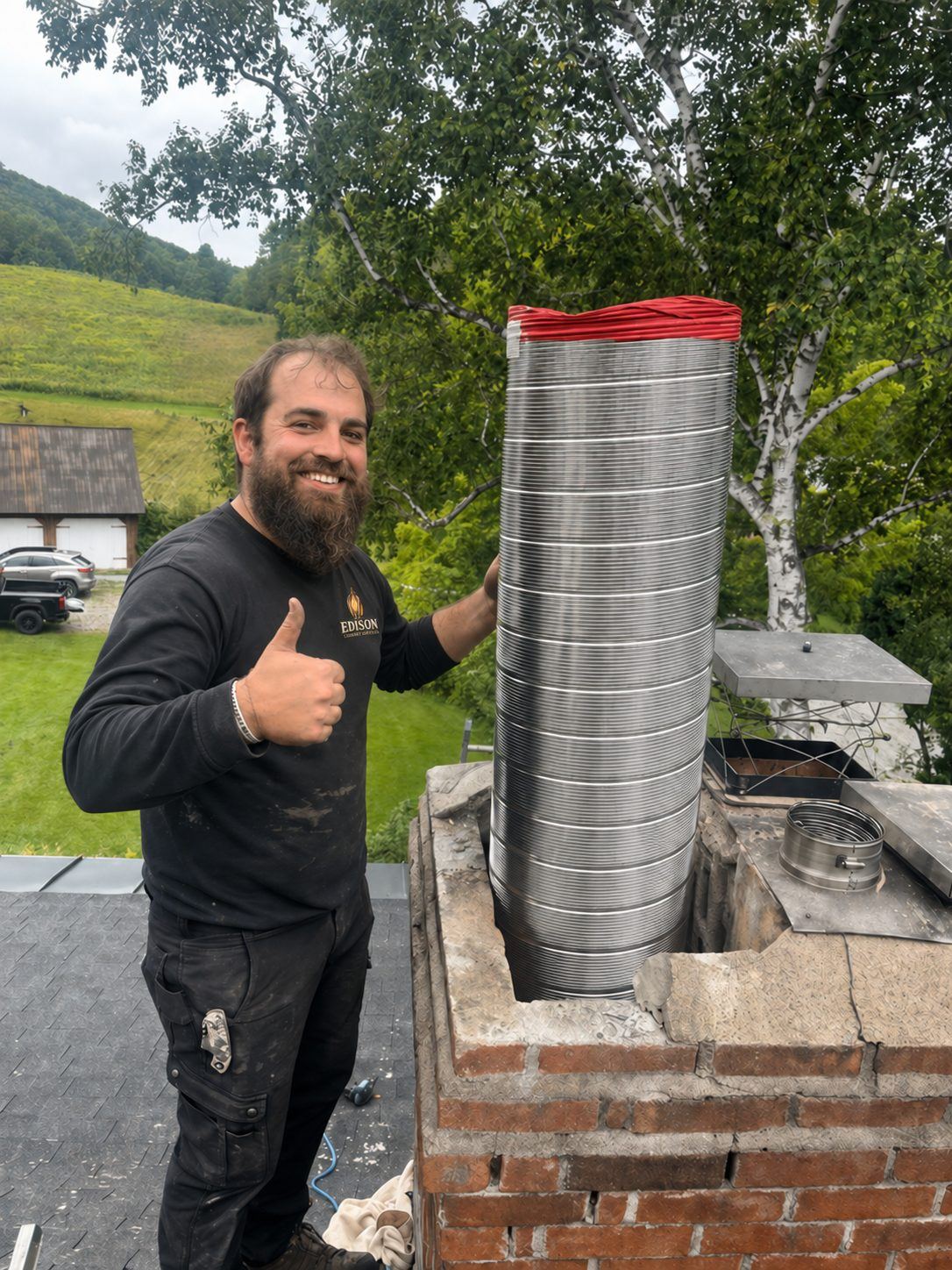
A liner is not a generic product. The correct type depends on the appliance and fuel — a wood-burning fireplace, a gas appliance, or an insert each have different requirements, and an insert in particular usually needs a liner sized to it. The goal is a liner that fits the appliance, the fuel and the flue, so the system vents as intended.
This is why liner work is tied so closely to inspection and to what appliance the flue serves, rather than to a fixed menu price.
Sometimes a liner issue is limited and repairable. Sometimes the flue needs a new liner. And sometimes a liner conversation is really a system conversation — for example, when installing an insert or considering a wood-to-gas conversion, the lining is specified as part of that larger plan. We keep the options honest and tied to what the inspection actually found.
A liner is specified from the appliance outward, not the other way around. A wood-burning fireplace, a gas appliance and an insert each impose different requirements on the liner — size, type and how it connects. Choosing a liner before knowing what it will serve is how a system ends up mismatched, which is why we tie liner decisions to the appliance and the camera view of the flue.
It is also why a liner is often part of a larger project. When an insert or a conversion is on the table, the lining is planned as a component of that system rather than a separate purchase.
We don’t quote prices online because the right scope depends on the system. These are the factors that usually move an estimate:
If a camera scan shows a cracked or compromised liner, do not use the fireplace until the flue condition has been resolved, because a damaged liner changes how the system can be used safely.
Before discussing a liner, note:
You usually can’t from the room — the flue is concealed. A camera inspection is how liner condition is actually established.
It depends on what the inspection finds. Some issues are repairable; others call for a new liner. We base the recommendation on the flue’s condition, not a default.
Usually yes — an insert typically needs a liner sized to the appliance so it vents correctly. That lining is planned as part of the installation.
Because the right liner depends on the flue condition and the appliance, neither of which we can see over the phone. Inspecting first is what makes the quote meaningful.
Talk to a technician
You don’t need to know the name of every chimney part. Tell us what you notice, whether the system burns wood or gas, and your ZIP code. If a system shows signs it may be unsafe to use, stop using it until it has been evaluated.
Available 24/7 954-408-2734
