Masonry & Structure
When localized repairs are no longer enough — a staged, honest approach to rebuilding a failed chimney or section.
When does it stop making sense to patch a chimney and start making sense to rebuild part of it?
A rebuild is the biggest chimney decision, so it should be the best-justified one. It becomes the sensible path when masonry has failed broadly rather than in one spot — widespread spalling, structural cracking, sections that no longer hold — and when repeated patch repairs would cost more over time than rebuilding the failed portion properly.
It is never a scare tactic and never a default. A rebuild is a considered recommendation that follows inspection, with a clear scope for exactly what is being rebuilt and why.
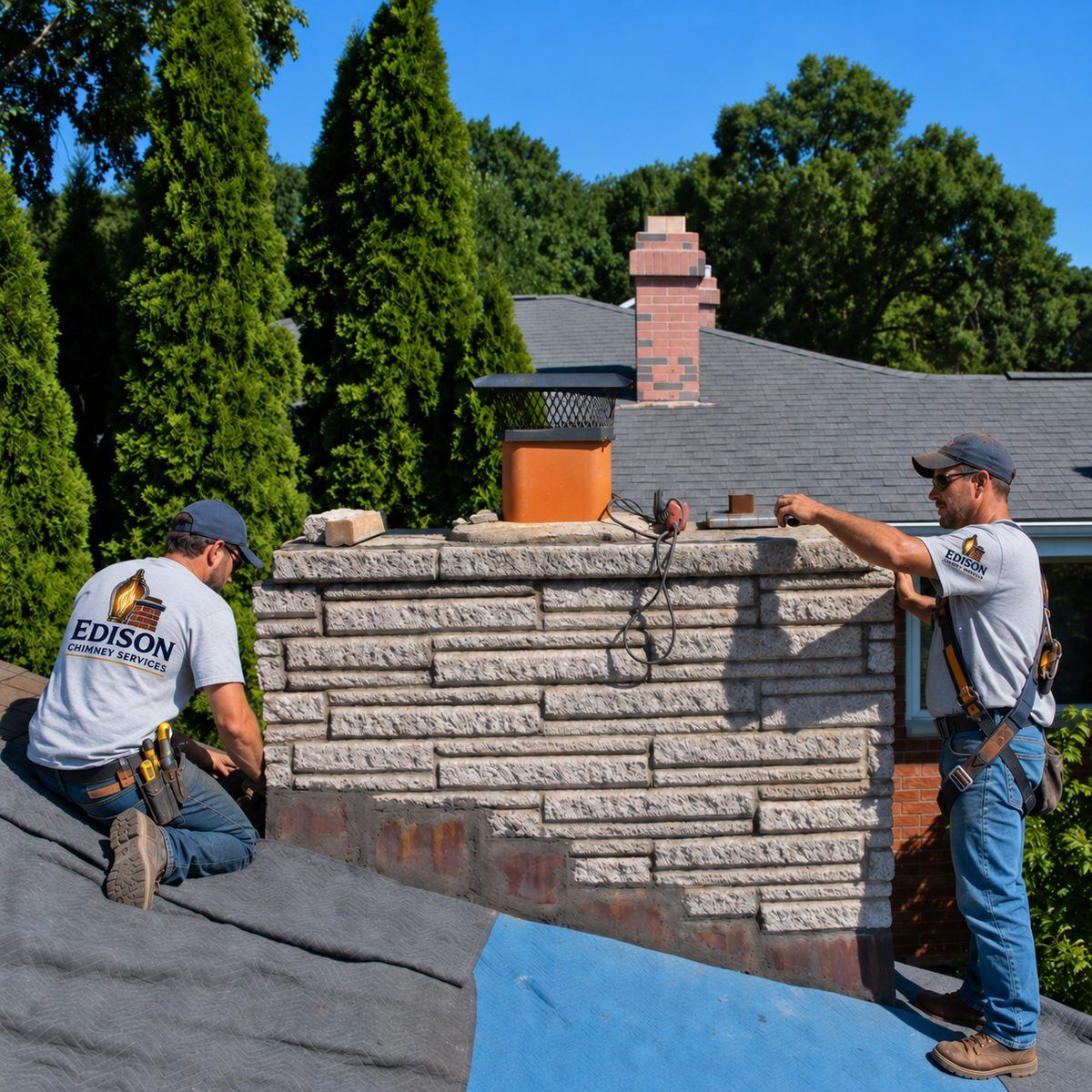
The trigger is pattern, not a single crack. One damaged area is a repair; a chimney where the mortar is failing throughout, the brick is spalling across large areas, or the structure has moved is a different situation. We look at whether the damage is localized and stable or widespread and progressing, and whether previous patches have held.
If a series of repairs keeps chasing new failures, that history itself is evidence that the underlying masonry has reached the end of patchable life.
Not every rebuild is total. Often the sound lower portion can stay while a failed upper section is rebuilt, or a specific area is taken down and rebuilt to restore structure and water resistance. We define the scope — what comes down, what is rebuilt, and how the crown, cap and flashing are handled as part of the finished result.
Staging matters: a rebuild is a real construction project, and understanding its sequence helps you plan for access, timing and how the fireplace can be used in the meantime.
A rebuild is also a chance to correct whatever let the chimney deteriorate — a crown that never shed water, a cap that never fit, joints laid in the wrong mortar. Rebuilding without addressing those causes would set up the same failure again. When we rebuild, the aim is a chimney that sheds water correctly from the top down, so the new work lasts.
The clearest sign that a rebuild deserves consideration is not a single dramatic crack but a pattern: patch after patch that keeps failing, spreading spalling, joints giving way across the stack. When repairs stop holding because the masonry around them has reached the end of its life, continuing to patch becomes the more expensive path. That repair history is often the most honest argument for a rebuild.
It is also the check against being oversold one. A rebuild recommended without that pattern, after a single look, deserves questions. A rebuild recommended because the chimney keeps defeating its own repairs is a different, better-founded conversation.
We don’t quote prices online because the right scope depends on the system. These are the factors that usually move an estimate:
If a chimney shows structural movement or significant cracking, treat it as potentially unsafe: stop using the fireplace and have the structure assessed before deciding on a rebuild.
Before a rebuild assessment, gather:
Often not. Many rebuilds are partial — a failed upper section — while sound masonry stays. We scope exactly what needs rebuilding rather than defaulting to the whole stack.
It should follow an inspection and be justified by a pattern of failure, with a clear scope. If a series of patches keeps failing, that history is the real argument.
We aim to match brick, mortar and profile as closely as practical so the rebuilt section is consistent with the home and performs correctly.
That depends on the scope and stage. We’ll tell you when it is and isn’t safe to use as the work proceeds.
Talk to a technician
You don’t need to know the name of every chimney part. Tell us what you notice, whether the system burns wood or gas, and your ZIP code. If a system shows signs it may be unsafe to use, stop using it until it has been evaluated.
Available 24/7 954-408-2734
