Masonry & Structure
Repointing deteriorated mortar joints — and being honest about when the brick itself is too far gone for pointing to fix.
When does repointing the mortar actually solve the problem — and when is it treating the wrong thing?
Tuckpointing (repointing) removes deteriorated mortar from the joints between bricks and replaces it with sound mortar. On a chimney whose brick is in good shape but whose joints have worn, weathered or cracked, it restores the bond and closes an easy path for water. Done at the right time, it is a genuine, lasting repair.
But pointing fixes joints, not bricks, and it does not fix a water source higher up. If the brick faces are spalling or the crown above is failing, new mortar joints alone will not stop the damage — and we’ll say so rather than sell pointing as a cure-all.
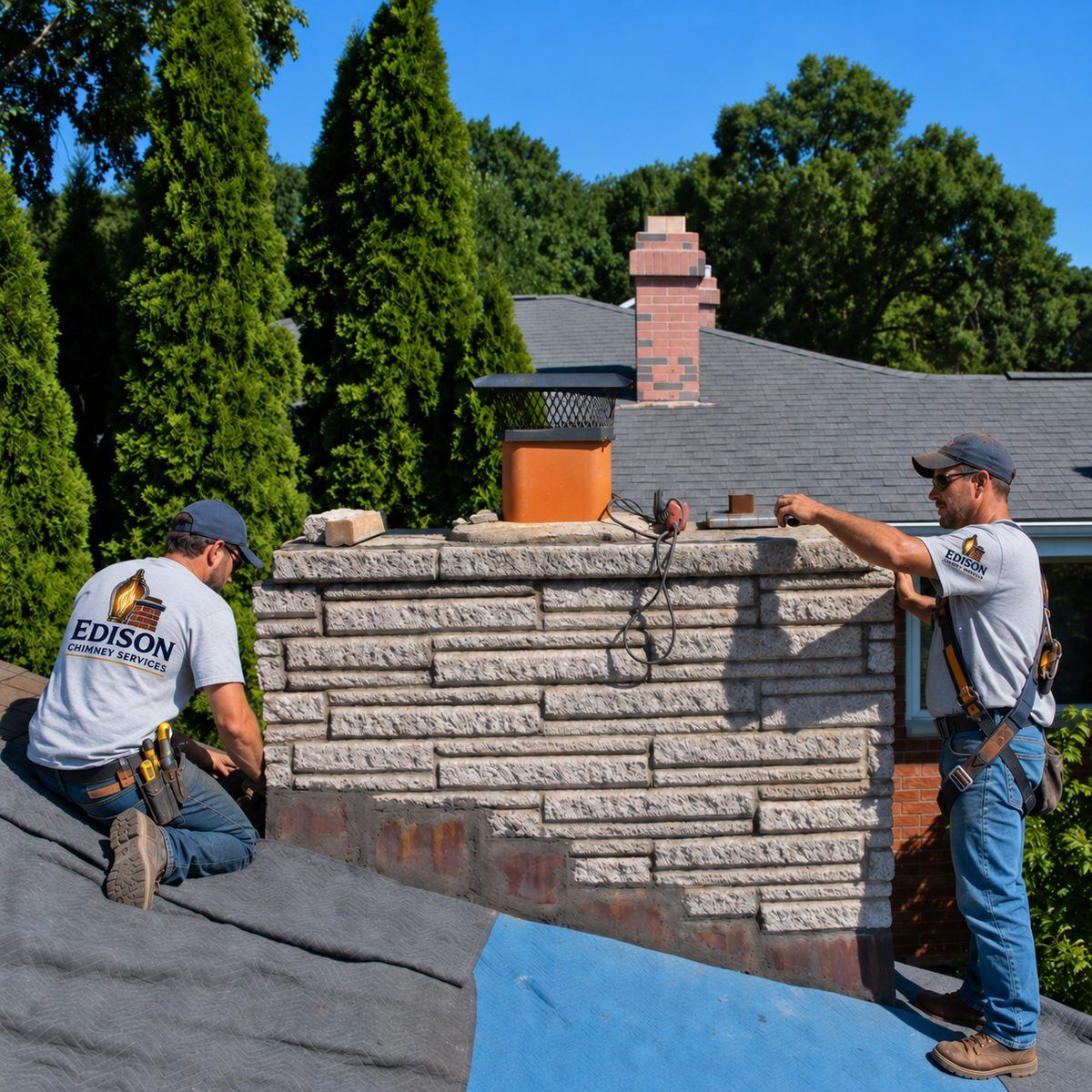
Mortar joints do real work: they bond the bricks, carry load, and keep water from running straight into the wall. When joints erode, the chimney loses some of that bond and gains an easy route for moisture. Repointing rakes out the failed mortar to a sound depth and replaces it, restoring both the structure and the water resistance of the joint.
For a chimney with good brick and tired joints, it is often exactly the right, proportionate repair.
If the brick faces themselves are spalling or cracked, new joints will not rebuild the brick — that is a masonry repair question. If water is entering from a failed crown or cap above, repointing the joints below treats a symptom while the source keeps working. And where deterioration is widespread, repeated pointing can become less economical than a partial rebuild.
The honest version of this service includes telling you when pointing is the answer and when it is only part of it.
Mortar is not one product. Using a mortar that is too hard or mismatched to the existing masonry can do more harm than good over time. Part of a proper repointing job is choosing a mortar appropriate to the brick and the original joints, and matching the joint profile so the repair performs and looks consistent with the rest of the chimney.
Repointing is only as good as the preparation behind it. Skimming fresh mortar over the face of failing joints without raking out the deteriorated material first produces a repair that looks new but bonds poorly and sheds off within a few seasons. Cutting the joints back to sound mortar at an appropriate depth is what lets the new pointing actually grip and last.
This is why a quick, cheap “pointing” can be a false economy. The visible result is similar on day one; the difference shows up in how long it holds.
We don’t quote prices online because the right scope depends on the system. These are the factors that usually move an estimate:
Worn joints are usually a durability and water issue, but if repointing is being considered because of structural movement or cracking, have the structure assessed first.
To scope repointing, note:
Tuckpointing renews the mortar joints. Masonry repair also addresses damaged brick and the water source. Which you need depends on whether the brick or just the joints have failed.
It can close a water path through failed joints, but if water is entering above — crown, cap or flashing — pointing the joints below won’t stop it on its own.
We choose a mortar appropriate to your masonry and match the joint profile, so the repair performs correctly and blends with the existing work.
Talk to a technician
You don’t need to know the name of every chimney part. Tell us what you notice, whether the system burns wood or gas, and your ZIP code. If a system shows signs it may be unsafe to use, stop using it until it has been evaluated.
Available 24/7 954-408-2734
