Fireplaces & Fireboxes
Assessing firebrick and refractory condition — and being clear about when use should stop until it is fixed.
Cracked firebrick — is it cosmetic, or a reason to stop using the fireplace until it’s repaired?
The firebox is the chamber where the fire actually burns, built to withstand direct heat. In a masonry fireplace it is lined with firebrick set in refractory mortar; both are designed to take temperatures that would damage ordinary materials. When the firebrick cracks or the refractory joints open up, it is worth taking seriously — not because every hairline is an emergency, but because the firebox is the barrier between the fire and the structure around it.
The right response is an assessment that judges how far the damage goes and whether continued use is safe, rather than a guess in either direction.
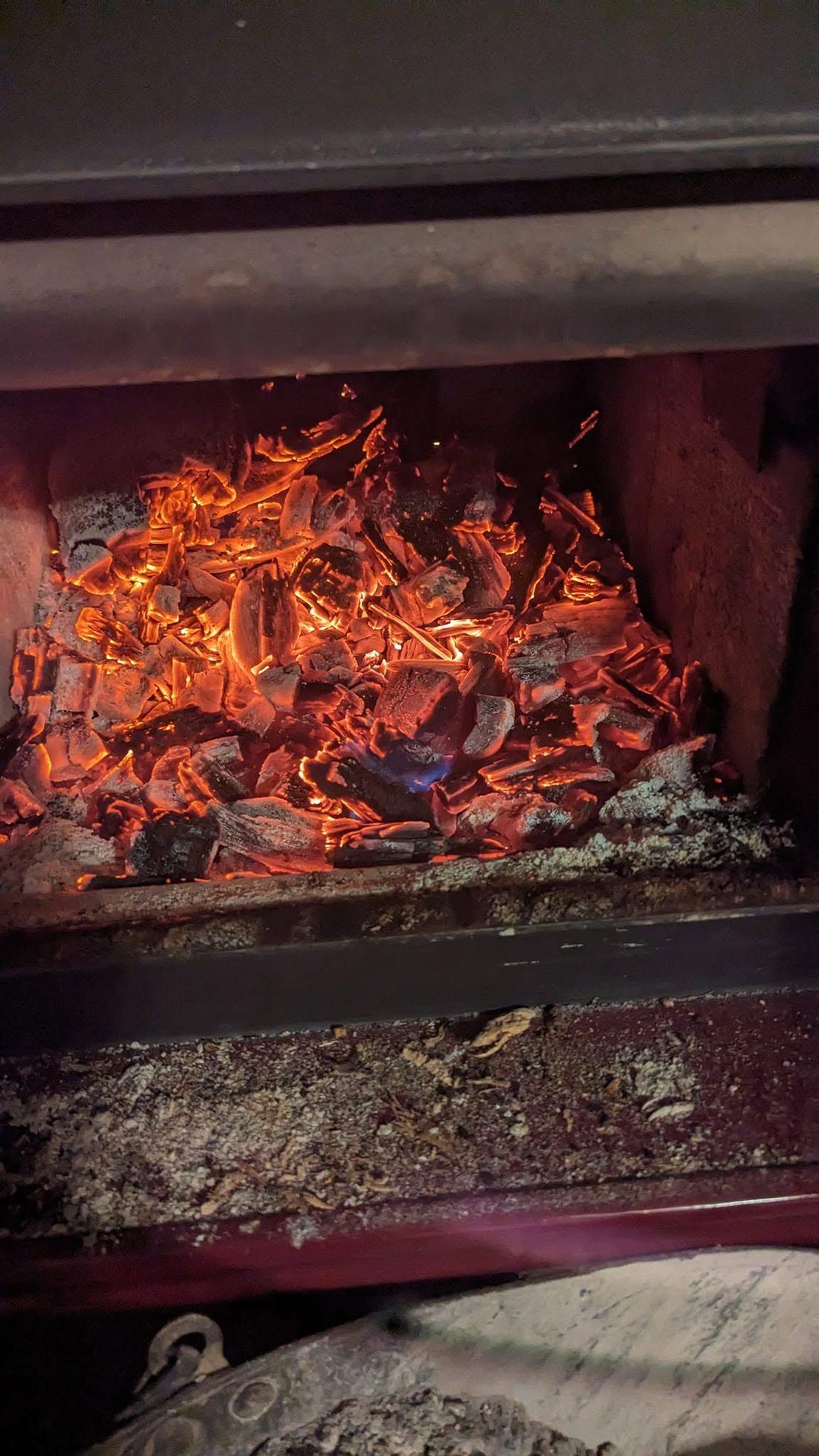
Common signs are cracked or crumbling firebrick, gaps where the refractory mortar between the bricks has opened, missing pieces, or areas that look heat-damaged beyond normal darkening. Because the firebox takes direct heat and thermal cycling, some wear over years is expected — the question is whether the damage has reached the point where the barrier is compromised.
That judgement is what an inspection provides. A minor surface mark and a crack that runs deep are different situations with different answers.
The firebox contains the fire and protects the surrounding structure from its heat. Significant cracks, open joints or missing material can let heat reach places it should not, which is why firebox damage is treated as a safety question, not just a cosmetic one. Damage can also extend beyond the firebox itself, so an assessment looks at whether the problem stops there or continues upward.
This is a service where “when to stop use” is a real part of the advice, not boilerplate.
In a masonry firebox, repair may involve replacing damaged firebrick and renewing refractory joints with appropriate materials. In a factory-built unit, the equivalent parts are the refractory panels, which must be manufacturer-approved for the specific model — a very different repair with different rules. Identifying which kind of firebox you have is the first step, because the correct fix depends on it.
Not every mark in a firebox is a problem. Surfaces darken, and very fine surface lines can appear with normal use. What warrants attention is different: cracks that are wide enough to matter, joints where the refractory mortar has opened, missing pieces, or heat damage that goes beyond discolouration. Telling ordinary aging from genuine damage is exactly what an assessment is for, so you neither over-worry a cosmetic mark nor ignore a real one.
The reason we err toward looking is what the firebox does: it is the barrier between the fire and the structure. When that barrier is in question, a short assessment is a reasonable price for peace of mind.
We don’t quote prices online because the right scope depends on the system. These are the factors that usually move an estimate:
If you see significant cracks, open joints or missing material in the firebox, stop using the fireplace and have it assessed. A compromised firebox is the barrier between the fire and your home, so it is worth pausing over.
Before a firebox visit, note:
Not every hairline is an emergency, but firebox cracks deserve an assessment because the firebox contains the fire. Depth and extent decide whether it’s cosmetic or a reason to stop using it.
Damaged firebrick is typically replaced and the refractory joints renewed. Minor issues may be repairable; we base it on how far the damage goes.
No. A prefab uses refractory panels that must be manufacturer-approved for the model. It’s a different repair from masonry firebrick.
If you see significant cracking, open joints or missing material, yes — stop and have it looked at. Better to pause than to use a compromised firebox.
Talk to a technician
You don’t need to know the name of every chimney part. Tell us what you notice, whether the system burns wood or gas, and your ZIP code. If a system shows signs it may be unsafe to use, stop using it until it has been evaluated.
Available 24/7 954-408-2734
