Cleaning & Inspection
Clearing soot, ash and debris from the fireplace itself — and being clear about what cleaning cannot fix.
What does cleaning the fireplace itself involve, and where does maintenance end and repair begin?
Fireplace cleaning focuses on the part of the system you live with — the firebox, hearth and visible surfaces — while chimney sweeping deals with the flue above. A good clean removes ash, soot and debris, leaves the firebox tidy, and gives you a clear view of the surfaces underneath, which often reveals whether anything needs attention.
Maintenance is about keeping a usable fireplace usable. It is not a substitute for repairing a cracked firebox, a failing damper or a leak, and we are careful not to let a tidy firebox stand in for a condition it cannot deliver.
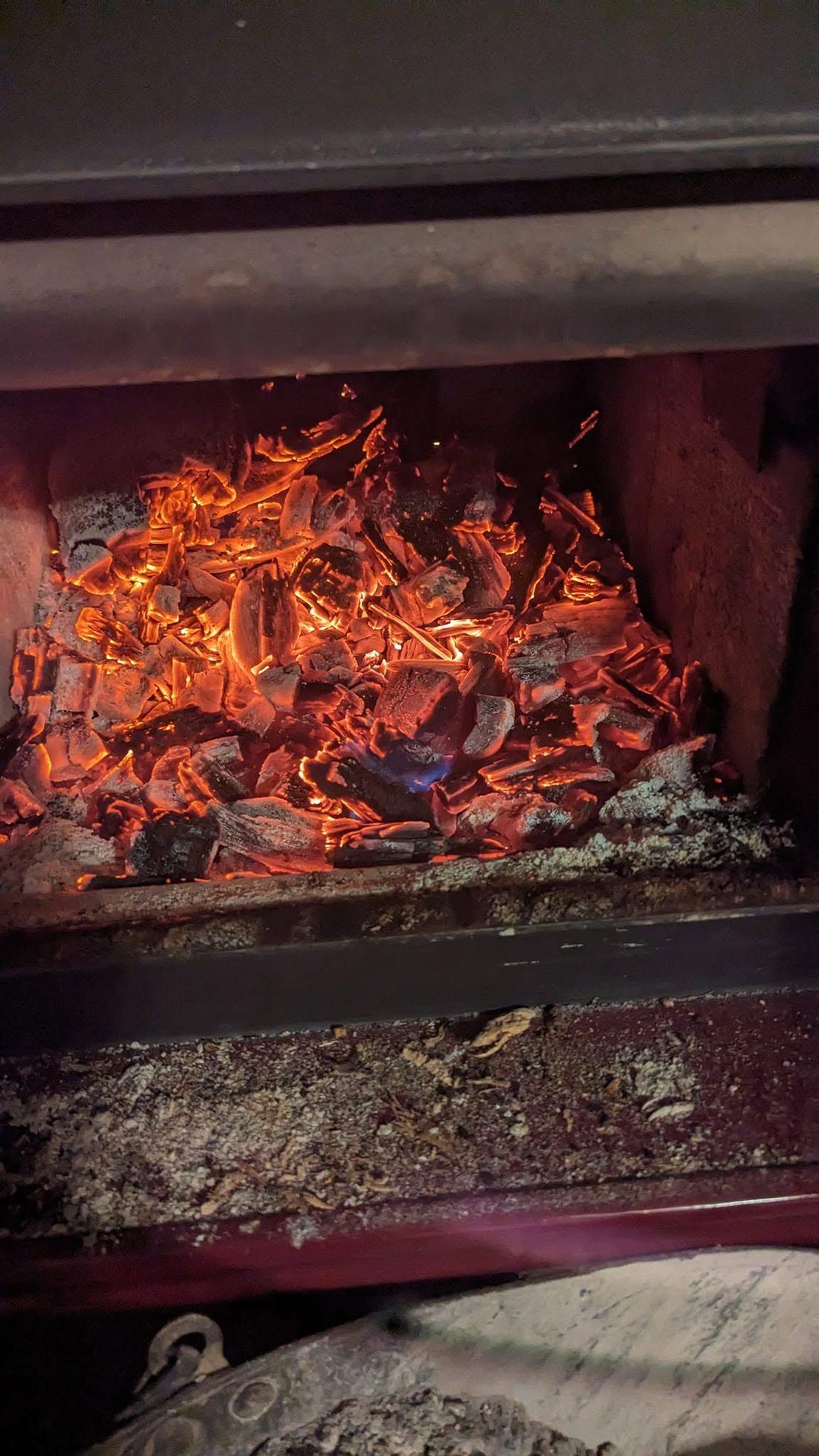
For a wood-burning fireplace, cleaning removes ash and soot from the firebox and hearth and clears debris that has collected. For a gas fireplace, “cleaning” means something different — careful attention to the glass, the logs or media, and the visible components, without disturbing the gas connection, which is professional work. In both cases the aim is a fireplace that is clean, clear and ready to assess.
Cleaning is also the moment surfaces become visible. Once ash is gone, cracked firebrick, a warped damper or staining from moisture is far easier to spot.
Removing soot does not repair damage. If the firebox has cracked refractory, that is a firebox repair question. If the damper will not close, that is a damper repair question. If there is a musty smell after rain, cleaning may reduce it temporarily, but the real answer is usually moisture or debris that an inspection should trace.
We would rather point you to the right repair than let a clean firebox imply a soundness it does not prove.
The most useful pattern in South Florida is to clean and check before the first fire of the season, especially after a long unused summer. Pairing a clean with a Level 1 inspection means the accessible surfaces are both tidied and assessed in one visit.
That routine catches small problems early and keeps the fireplace pleasant to use, without pretending to do the job of a structural repair.
One underrated benefit of a proper cleaning is simply visibility. Once ash and soot are gone, the surfaces underneath can be seen clearly — and that is often when a cracked firebrick, a warped damper or a stain from moisture first becomes obvious. A clean fireplace is not only more pleasant to use; it is far easier to assess honestly.
That is why we treat cleaning and looking as complementary. The clean gives you a tidy fireplace, and it gives whoever is checking the system an unobstructed view of what it is telling them.
We don’t quote prices online because the right scope depends on the system. These are the factors that usually move an estimate:
If cleaning reveals cracked firebrick, a damper that will not move, or signs of a leak, hold off on the next fire until the specific issue is assessed.
Before a cleaning, note:
No. Cleaning focuses on the fireplace and firebox you see; sweeping clears the flue above. They complement each other and are often done together.
Carefully and without disturbing the gas connection, which is professional work. It centres on the glass, the logs or media and the visible components — see gas fireplace service.
It can help, but a persistent odour usually has a cause — moisture, debris or an animal — that needs to be traced rather than just cleaned around.
Talk to a technician
You don’t need to know the name of every chimney part. Tell us what you notice, whether the system burns wood or gas, and your ZIP code. If a system shows signs it may be unsafe to use, stop using it until it has been evaluated.
Available 24/7 954-408-2734
