Gas & Installation
Assessing the opening, venting and product fit before installing — so a new fireplace suits the home and vents correctly.
What has to be assessed before installing a new fireplace so it actually fits the home and vents correctly?
Installing a fireplace is more than placing a unit in a wall. The right product depends on the space, the way it will vent, and how it will be used — and getting those right before installation is what separates a fireplace that performs from one that disappoints. Whether the plan is a new masonry-style feature, a factory-built unit, or a gas appliance, the assessment comes first.
We approach installation by understanding the opening, the venting and the product together, so the finished fireplace suits the home rather than forcing the home to accommodate an ill-matched unit.
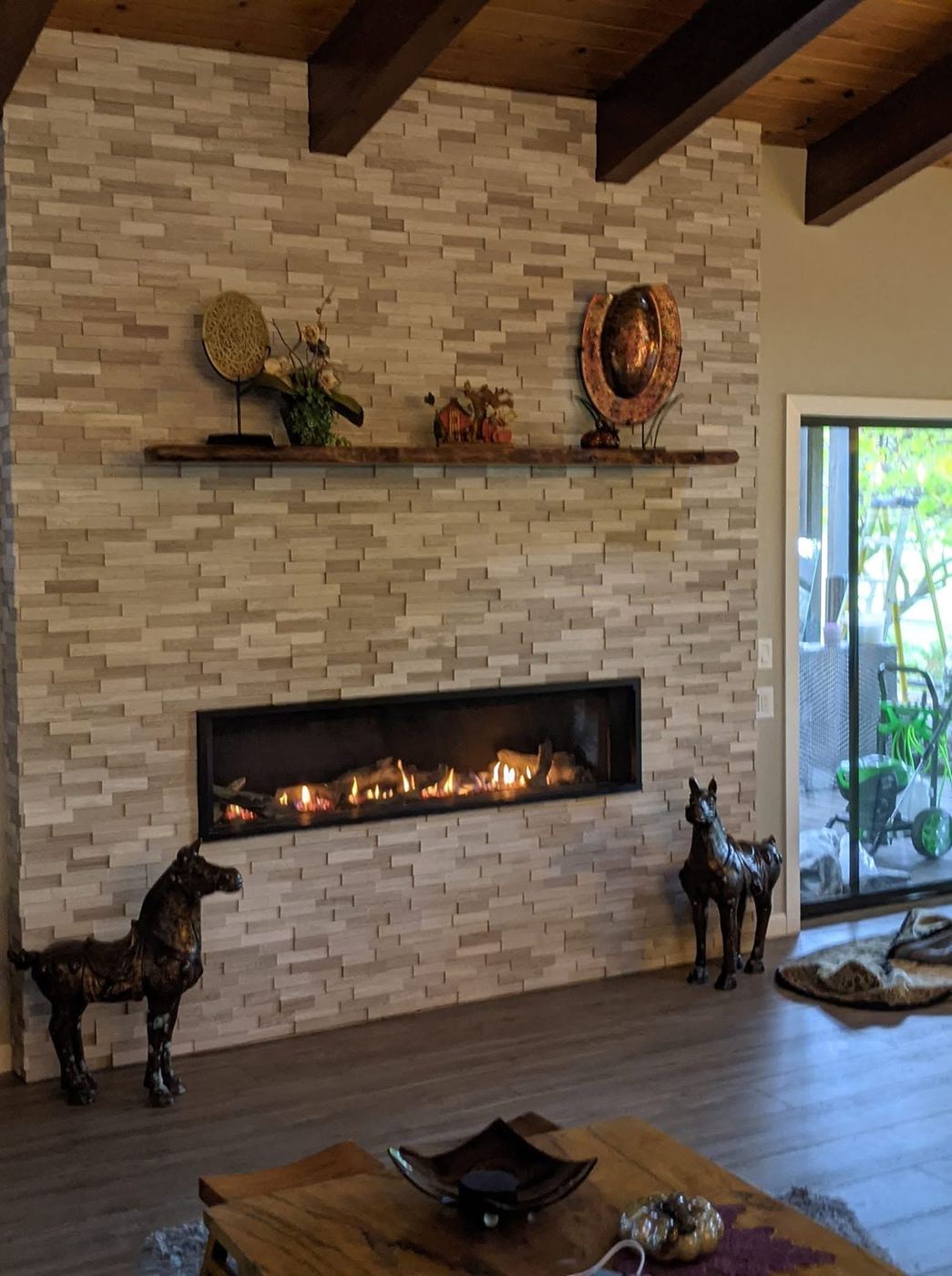
The available space, the wall construction, clearances and how the fireplace will sit in the room all shape what can be installed. A unit that is wrong for the opening — too large, poorly placed, or requiring venting the space cannot support — creates problems that are far cheaper to avoid than to fix later.
This is where an honest installation begins: matching the product to the space rather than the other way round.
Every fireplace has to vent according to its type. A factory-built or gas appliance has specific venting requirements, and the installation plan has to satisfy them — which may involve a flue or liner sized to the unit. Choosing the product and planning its venting are the same conversation, because a beautiful unit that cannot vent properly is not a good choice.
For gas units, the gas work is qualified professional work, handled to the system’s requirements.
Not every project needs a brand-new fireplace. If you already have a masonry fireplace and want efficiency, a fireplace insert may achieve your goal with less work. If you want to move from wood to gas, a conversion might be the route. We’ll help you compare a full installation against these alternatives so you spend on the option that actually fits your goal.
The most common installation regret is choosing the fireplace first and worrying about venting second. Venting is not a detail bolted on at the end; it is part of the product decision, because a unit that cannot vent properly in your space is the wrong unit no matter how good it looks. Planning the venting and choosing the product as a single conversation is what produces a fireplace that performs.
That is also where a professional assessment earns its keep. Understanding clearances, wall construction and how the unit will vent before anything is purchased prevents the expensive discovery that the chosen fireplace does not suit the space.
We don’t quote prices online because the right scope depends on the system. These are the factors that usually move an estimate:
A new installation should not be used until it is complete and, for any fuel-burning unit, confirmed to vent correctly. If a newly installed gas unit is ever accompanied by a gas smell, leave and call your utility.
Before installation, consider:
No. The space, wall construction, clearances and venting determine what’s feasible. We assess the opening and venting before recommending a product.
It depends on the type. Different fireplaces vent differently — some through a flue, some through other approved venting. The venting plan is part of choosing the product.
Often an insert achieves an efficiency goal with less work than a full installation. We’ll compare the options for your situation.
Gas work is qualified professional work, handled to the system’s requirements — never DIY.
Talk to a technician
You don’t need to know the name of every chimney part. Tell us what you notice, whether the system burns wood or gas, and your ZIP code. If a system shows signs it may be unsafe to use, stop using it until it has been evaluated.
Available 24/7 954-408-2734
