Gas & Installation
Choosing the right insert and planning the lining and venting — so the efficiency gain is real, not just a new face on an old opening.
How do you choose and install an insert so it genuinely improves efficiency rather than just changing the look?
A fireplace insert is a sealed appliance that fits into an existing fireplace opening to burn more efficiently and controllably than an open fire. Done properly, it turns a drafty, inefficient opening into a much more effective heat source. But the gain is real only if the insert is matched to the opening and, crucially, if its lining and venting are planned correctly — an insert usually needs a liner sized to the appliance.
So installing an insert is as much about the venting behind it as the appliance in front. Skipping the lining and venting plan is how an insert ends up looking better without performing better.
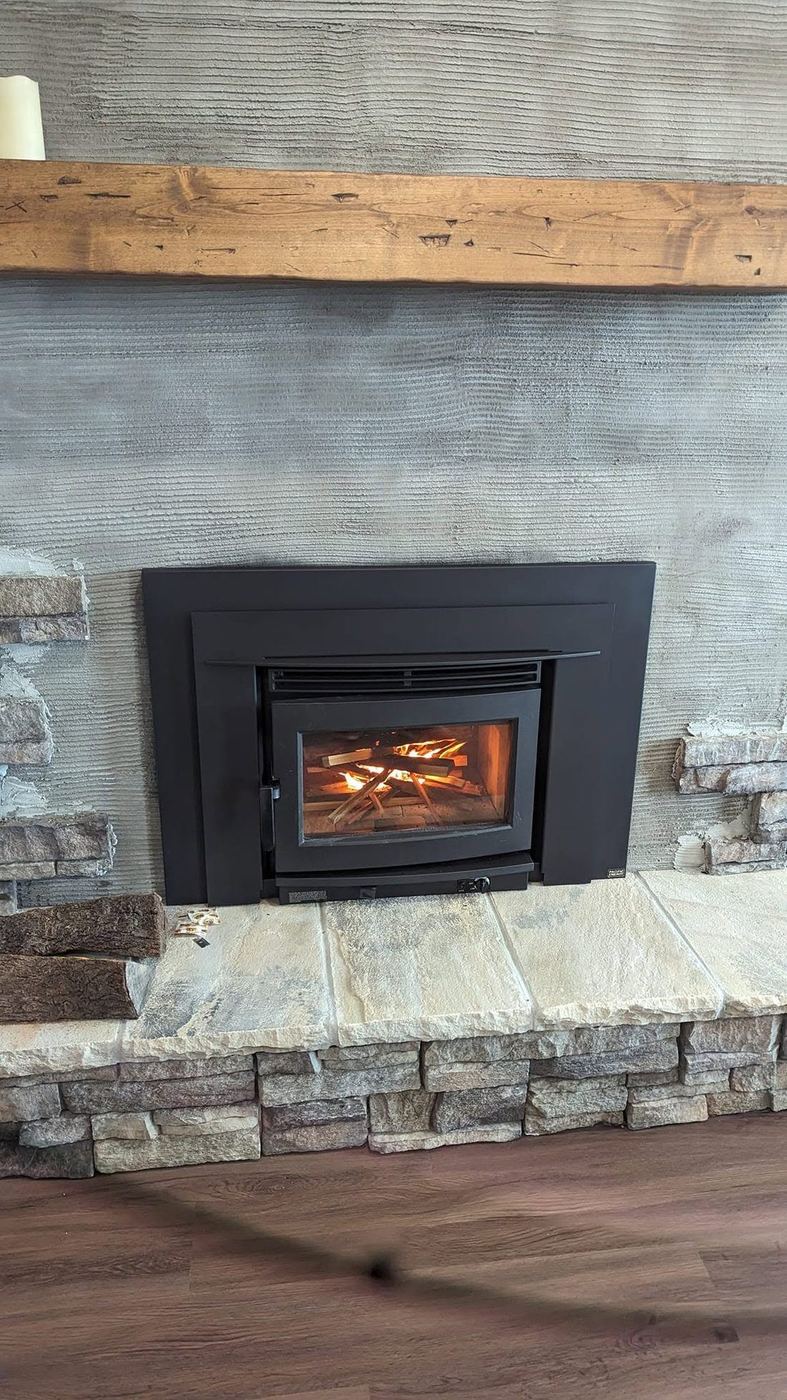
Inserts come in wood and gas versions and in different sizes and outputs. The right one depends on the opening it must fit, how you intend to use it, and the fuel you prefer. An insert that is too large or too small for the space, or wrong for how you’ll use it, undermines the benefit. Matching the appliance to the opening and the goal is the first step.
If you are weighing an insert against a gas log set or a full conversion, the deciding factor is usually whether you want efficiency or mainly ambience.
This is the part that makes an insert perform. An insert typically requires a liner sized to the appliance so it vents correctly and safely, and the existing flue condition has to be assessed before that can be specified. The lining, the connection and the venting are planned together as part of the installation — not treated as an afterthought.
Assessing the flue first, often with a camera, is what lets us specify a liner that fits the appliance rather than guessing.
A proper installation seats the insert, completes the lining and venting, and confirms the appliance operates as intended. For gas inserts, the gas work is qualified professional work. The result should be a fireplace that is more efficient and controllable, with venting you can rely on — and a clear explanation of how to use and maintain it.
It is tempting to see the insert as the whole project and the liner as an add-on, but the liner is what makes an insert work. A sealed appliance dropped into an old opening without a properly sized liner will not vent as intended and will not deliver the efficiency that justified it. That is why we plan the lining and venting as part of the installation, and assess the existing flue — usually with a camera — before specifying anything.
Get the liner right and an insert transforms a drafty opening into an efficient heat source. Skip it and you have spent money on a better-looking version of the same inefficient fireplace.
We don’t quote prices online because the right scope depends on the system. These are the factors that usually move an estimate:
Do not use a newly installed insert until the lining and venting are complete and confirmed. For a gas insert, any gas smell means leave and call your utility.
Before an insert, have ready:
Yes, when matched and vented properly — a sealed insert burns far more efficiently than an open fire. The gain depends on correct sizing, lining and venting.
Usually. An insert typically needs a liner sized to the appliance so it vents correctly. The existing flue is assessed before the liner is specified.
Neither is universally better; it depends on your goals and preferences. We’ll compare them for your opening and how you’ll use the fireplace.
No. An insert is a sealed appliance focused on efficiency; a log set sits in an existing firebox mainly for ambience.
Talk to a technician
You don’t need to know the name of every chimney part. Tell us what you notice, whether the system burns wood or gas, and your ZIP code. If a system shows signs it may be unsafe to use, stop using it until it has been evaluated.
Available 24/7 954-408-2734
