Gas & Installation
Choosing the right system, planning the venting, and handling the gas work professionally — with an honest look at your existing fireplace first.
What’s actually involved in converting a wood-burning fireplace to gas — and is my fireplace a good candidate?
Converting a wood-burning fireplace to gas can mean different things — a gas log set for ambience, or a gas appliance or insert for cleaner, more controllable use. Each is a different project with different venting and gas requirements, and the right choice depends on your existing fireplace, your goals, and what your chimney and venting can support.
A responsible conversation starts by assessing the fireplace you have, not by assuming any wood fireplace can become any gas system. The gas work involved is qualified professional work, handled properly rather than improvised.
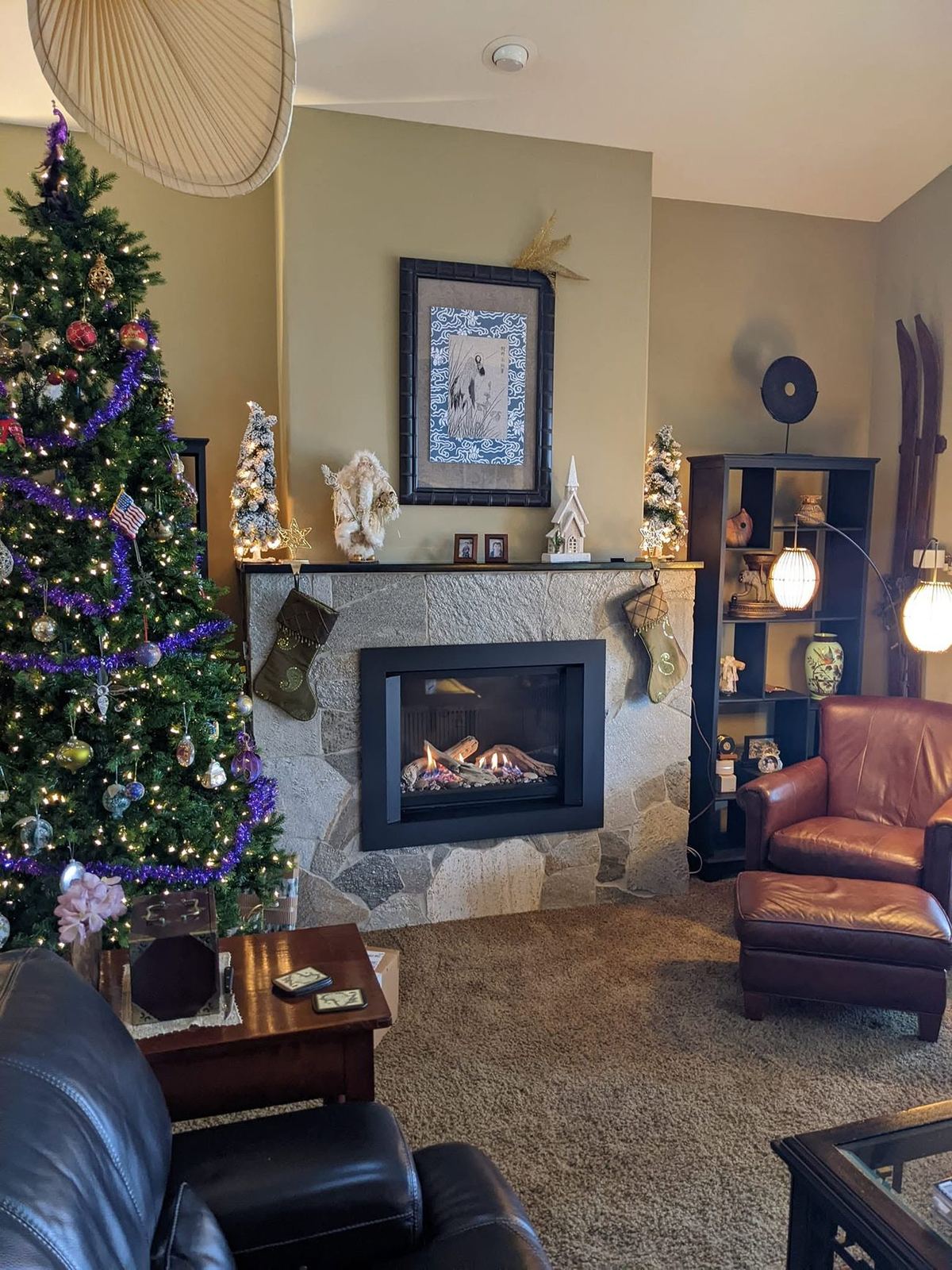
If you want the look and warmth of a fire with the convenience of gas, a gas log set in your existing firebox may be enough. If you want efficiency and a sealed, controllable appliance, a gas insert is a bigger step with a venting plan of its own. Understanding which outcome you want shapes everything that follows.
We help you compare these honestly — ambience versus efficiency, simpler versus more involved — so the conversion matches your actual goal.
Before any conversion, the existing firebox, flue and venting are assessed. The condition of the firebox, the state of the flue and liner, and how the chosen gas system needs to vent all determine what is feasible. A conversion may require a liner sized to the new appliance, and the damper and cap have to suit the new setup.
This assessment is what keeps a conversion from being a surprise. It tells you what your fireplace can support before you commit to a product.
The gas connection and the appliance installation are qualified professional work, done to the requirements of the system — not with DIY instructions. If any part of the project is outside a safe scope, we say so and handle it appropriately. The finished result should be a fireplace that operates the way you intended, with venting and gas work you can trust.
“Converting to gas” hides two quite different projects. A gas log set in your existing firebox is a modest change aimed at convenience and ambience. A gas insert or appliance is a larger project aimed at efficiency, with its own venting and often a new liner. Deciding which destination you actually want — easy fire versus efficient heat — determines the scope, the cost and what your chimney needs to support.
We start there rather than with a product, because the same phrase can lead to a simple afternoon’s work or a significant upgrade depending on which one you mean.
We don’t quote prices online because the right scope depends on the system. These are the factors that usually move an estimate:
If you smell gas at any point after gas work, leave and call your utility. Do not attempt gas connections yourself, and do not operate a newly converted system that behaves abnormally until it has been checked.
Before a conversion, note:
Not automatically. It depends on the firebox condition, the flue and venting, and the system you choose. We assess your fireplace before saying what’s feasible.
A gas log set in your existing firebox is usually the simplest, for ambience. A gas insert is a bigger step focused on efficiency.
Sometimes. A gas insert or appliance often needs a liner sized to it. Whether yours does depends on the system and the flue, which the assessment determines.
No. Gas connections are qualified professional work. We handle them properly and never provide DIY gas-line instructions.
Talk to a technician
You don’t need to know the name of every chimney part. Tell us what you notice, whether the system burns wood or gas, and your ZIP code. If a system shows signs it may be unsafe to use, stop using it until it has been evaluated.
Available 24/7 954-408-2734
